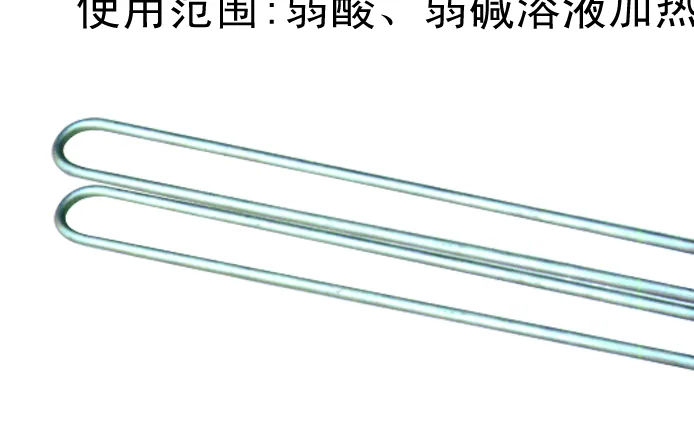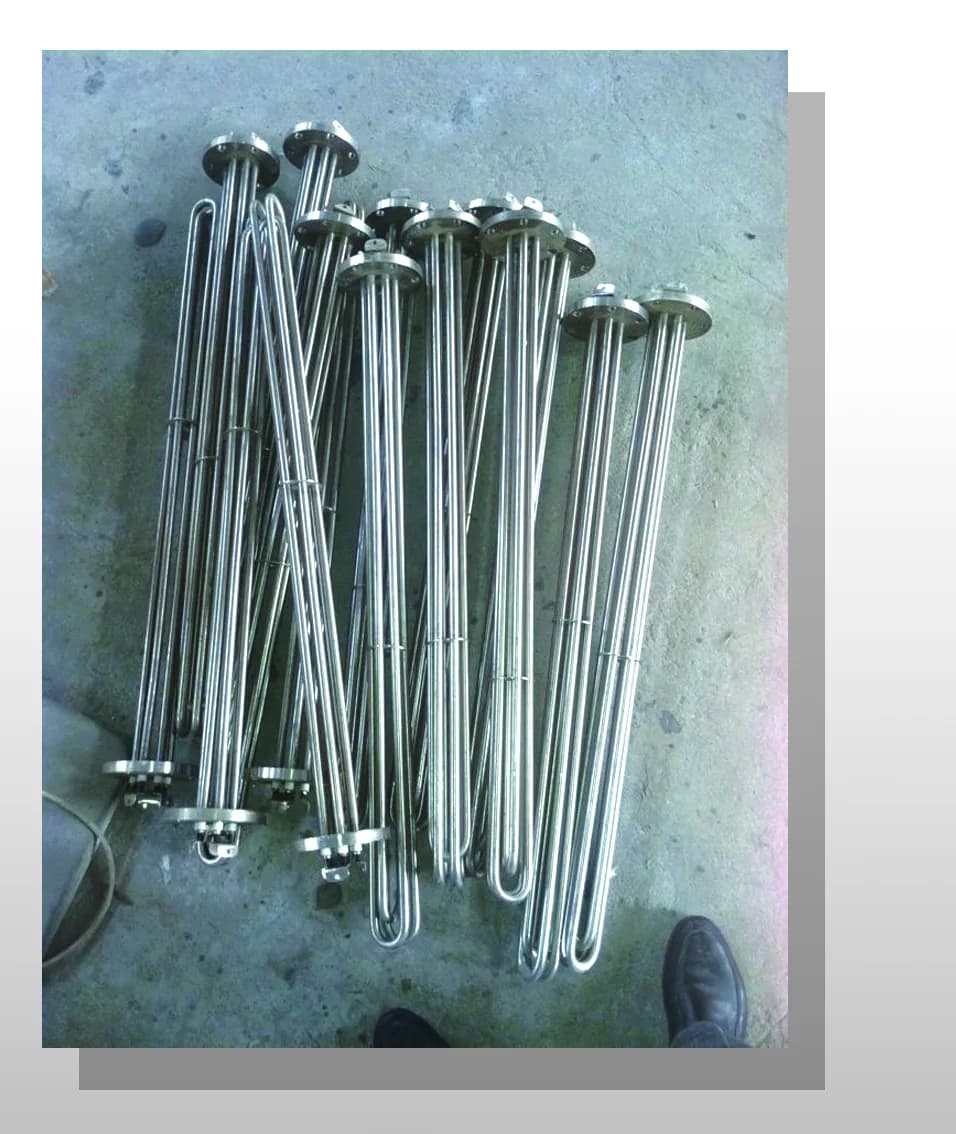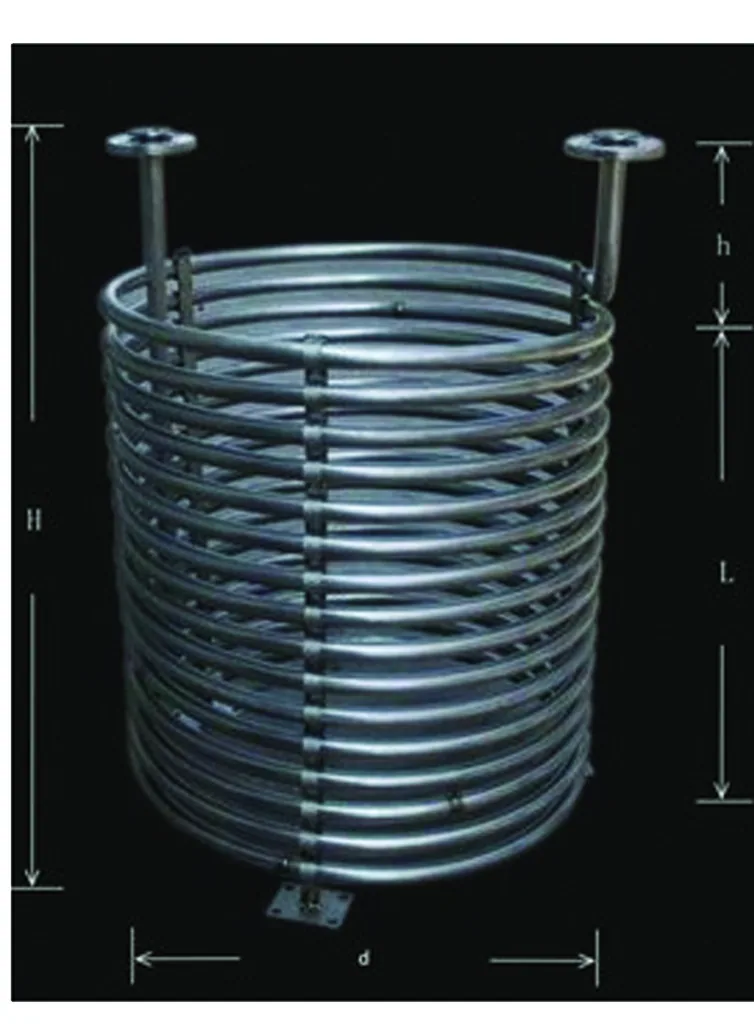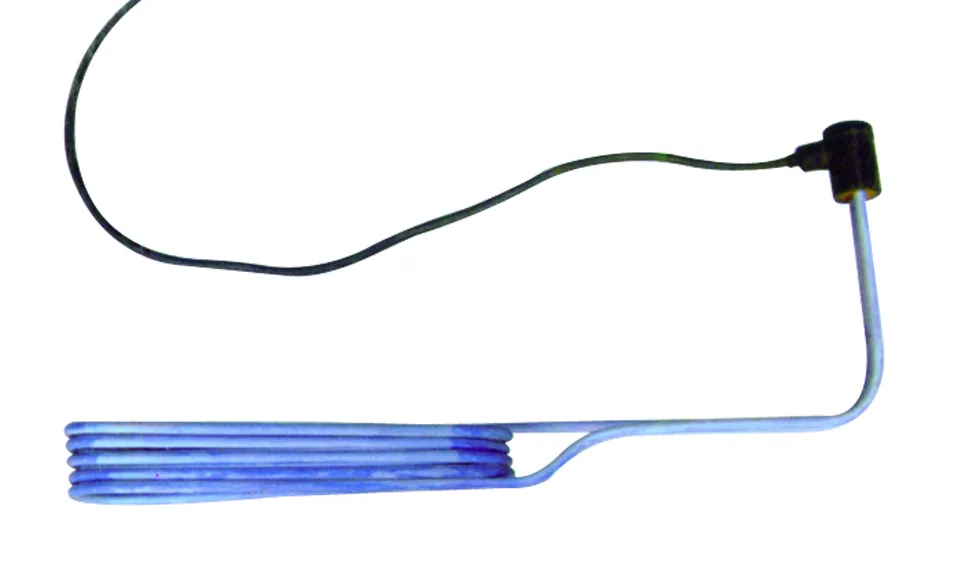
PTFE-clad flat immersion heater for strong acid and alkali plating baths
四氟包覆浸入式加热器
四氟管加热器
用于电镀行业强酸强碱槽液的四氟包覆管状元件。化学性质近乎惰性,温度限 80 °C 且功率密度低;按槽体布置成型。
- Max medium temperature
- 176 °F(80 °C)
- Power range
- 0.5 – 6 kW
- Voltage
- 220 / 380 V, 50 Hz
- Sheath material
- PTFE
- Medium
- Acid, Alkali
- Mounting
- Bracket, Free-standing
- Tube diameter
- 0.472–0.63 in
- Watt density guidance
- ≤ 1.5 W/cm² (10 W/in²) — set by the cladding, not the coil
- Lead time
- 22–35 days
- MOQ
- 5 units
- Pricing
- On application
Design notes
强酸强碱电镀液,80 °C 以下
PTFE cladding is the answer when a bath is aggressive enough that even titanium will not survive it — strong acids, strong alkalis, hydrofluoric acid and the harsher end of plating and stripping chemistry. The fluoropolymer is close to chemically inert, so the sheath simply does not participate in the bath.
Two limits come with that inertness. PTFE softens well below the temperature a metal sheath tolerates, which caps service at about 80 °C. And it is a poor thermal conductor, so heat has to cross an insulating layer to reach the solution — meaning a low watt density, a longer heated length for the same kilowatts, and a physically larger element than a metal equivalent.
Design the mounting around the material. PTFE is soft: it will not take clamping loads, sharp bracket edges or the weight of the element cantilevered off one end. Support it along its length on smooth plastic saddles, and keep the transition where the cladding meets the terminal end out of the solution and out of the splash zone.
Features
- 金属芯外包四氟 —— 对强酸强碱近乎惰性
- 适用于钛材失效的场合,包括氢氟酸工况
- 按槽体形状设计,而非按标准长度供货
- 可选四氟接线盒,用于飞溅区防护
- 设计上就采用低功率密度 —— 元件更长,寿命更久
Typical applications
- 镀铬、镀镍、镀锌槽
- 酸洗与退镀槽
- 氢氟酸与混酸蚀刻线
- 强碱除油槽
- 光化学与线路板蚀刻槽
North American build options
- Voltage
- 120 / 208 / 240 / 277 / 480 / 600 V @ 60 Hz
- Threads
- NPT or BSP cut to order
- Flanges
- ANSI B16.5 150# / 300#
- Drawings
- Issued in inches on request
These are build options, not stock items — the catalog part numbers above are 50 Hz with metric fine threads. State what you need on the RFQ.
Part numbers & dimensions
6 catalog part numbers in the JGS-PTFE series
PTFE elements are always made to the tank. Send internal tank dimensions, the bath chemistry and concentration, the operating temperature and the support arrangement with your inquiry.
Minimum order quantity for this series is 5 units. Dimensions switch between millimetres and inches with the unit toggle in the header.
Full specification
- Sheath material
- PTFE cladding over metal core
- Max. medium temperature
- 80 °C
- Chemistry
- Strong acid, strong alkali, HF-bearing baths
- Watt density
- ≤ 1.5 W/cm² (10 W/in²)
- Form
- Designed to the tank layout
- Voltage
- 220 V or 380 V, 50 Hz
- Power range
- 0.5 – 6 kW per element
- Support
- Smooth plastic saddles along the length; no metal clamps
Questions engineers ask
Why is a PTFE heater so much bigger than a metal one of the same rating?
Because the cladding that makes it chemically inert also insulates it. Heat has to cross the PTFE layer to reach the solution, so the safe watt density is roughly a fifth of what a metal sheath takes. The same kilowatts therefore need several times the heated length. Plan the tank space for it — trying to fit the load into a metal-sized element is what melts the cladding.
What happens if a PTFE element runs above 80 °C?
The cladding softens and eventually loses integrity, at which point the bath reaches the metal core and attacks it — usually followed by an earth fault. Fit a solution-temperature controller with a high-limit, and never rely on the bath's thermal mass to hold the element down. In a tank that must run hotter than 80 °C, PTFE is the wrong choice and the process needs a different sheath or indirect heating.
Can PTFE elements handle hydrofluoric acid?
Yes — this is one of the cases where PTFE is the only practical sheath, since titanium has no useful resistance to HF. Tell us the acid, its concentration and the operating temperature so the cladding thickness and support arrangement are specified for it rather than assumed.