Catalog codes look opaque until you see the four fields they are made of. Once you can read them, you can also write them, which makes ordering repeats and cross-checking a quotation much faster.
The anatomy of a code
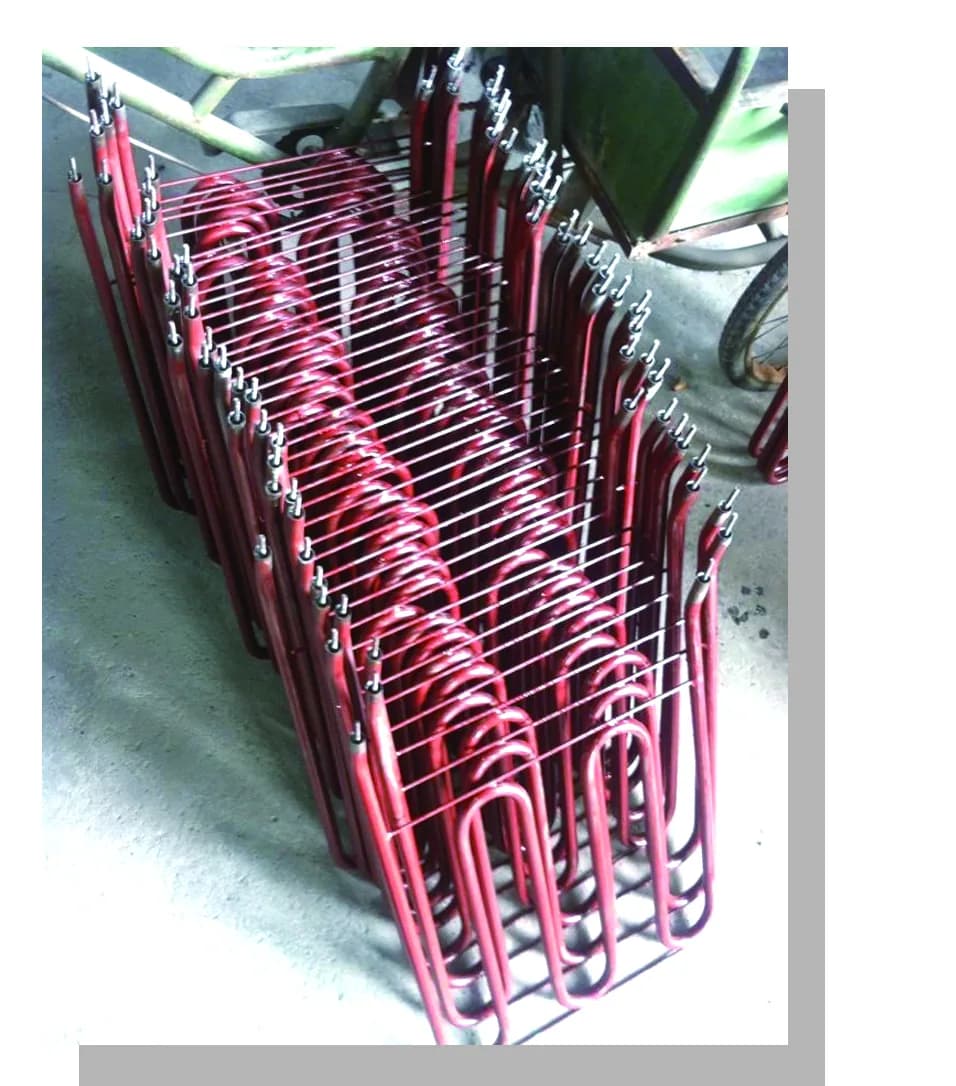
Take JGQ3-380/2.0. JG is the house prefix. Q is the series letter and names the medium — air. The 3 is the bend form within that series. 380 is the supply voltage. 2.0 is the rating in kilowatts.
Why some codes carry two series letters
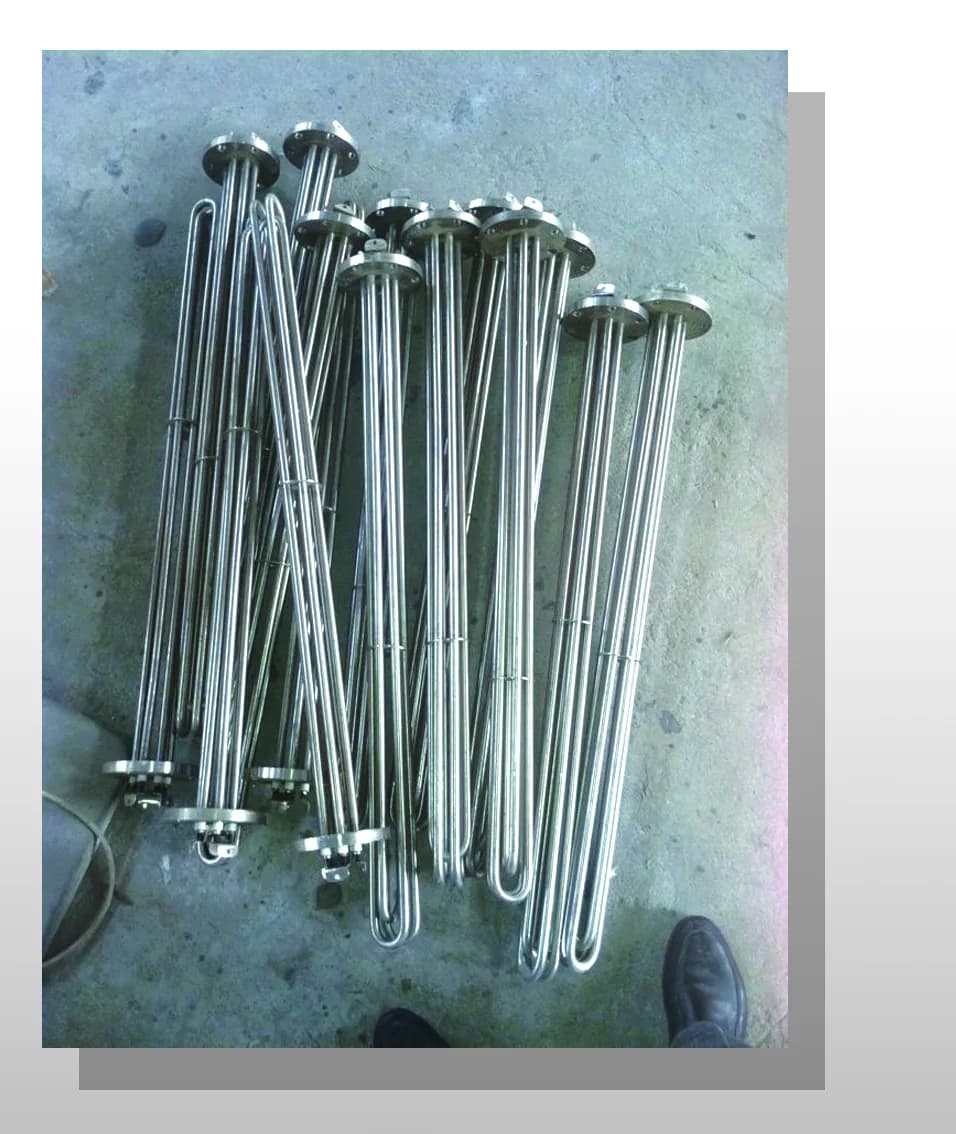
Salt and alkali heaters are cataloged as JGX1 (JGJ1) and so on, because the two share a geometry but not a sheath. The X build is stainless for nitrate salt; the J build is 10# steel for caustic alkali. The dimension table applies to both — the material does not. Ordering the bracketed alternative by accident gets you a correctly sized element in the wrong alloy, which is worse than getting nothing.
Suffixes
- -FL — flange mounted assembly
- -TH — threaded single element
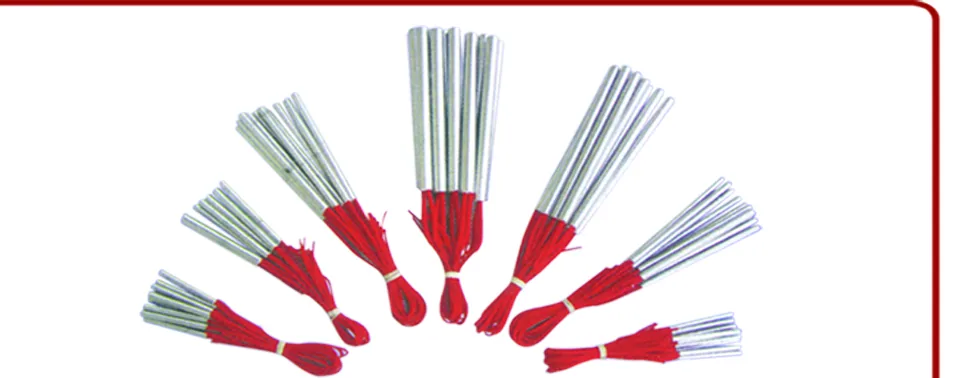
- -H / -M — high or medium watt density (cartridge series)
- -R — right-angle lead exit (cartridge series)
- -S — stainless variant where the base series is carbon steel
- -Ti / -PTFE — titanium sheath or PTFE cladding
Building a code from a duty
Work left to right. Medium picks the series letter. Bend form or mounting picks the number or suffix. The site supply picks the voltage. The heat calculation gives the kilowatts. If the resulting code is not in the table, it is almost certainly still buildable — roughly half of what leaves the plant is made to a customer drawing rather than to a catalog code.
常见问题
What does the number immediately after the series letter mean?
It is the bend form within that series. In the JGQ air range, 1 and 2 are single and double hairpins, 3 is a triple hairpin, 4 is a long narrow U for duct walls, 5 is a deep serpentine and 6 is the compact low-voltage form. The number does not encode power — that is the figure after the slash.
Why is JGX1 written as JGX1 (JGJ1)?
Because the two share the same dimensions but not the same sheath. JGX is stainless for nitrate salt; JGJ is 10# steel for caustic alkali. The bracket signals that the table row covers both geometries, and you must pick the alloy that matches your bath chemistry.
Can I order a code that isn't in the catalog?
Yes, and it is routine — roughly half of production is made to customer drawings. Send a dimensioned sketch with the medium, kilowatts, voltage and mounting detail. You will get a drawing back to approve, and the approved drawing then governs the dimensions rather than any catalog figure.