The following is the manufacturer's own operating guidance, set out in the order you meet it on site — from unpacking to commissioning to routine maintenance.
Before installation
- Store elements in a dry place. Magnesium oxide absorbs moisture and insulation resistance falls in a damp store.
- Megger the element before fitting. If insulation resistance is below 1 MΩ at 500 V, bake at around 200 °C until it recovers, or bring the element up at reduced voltage until resistance returns.
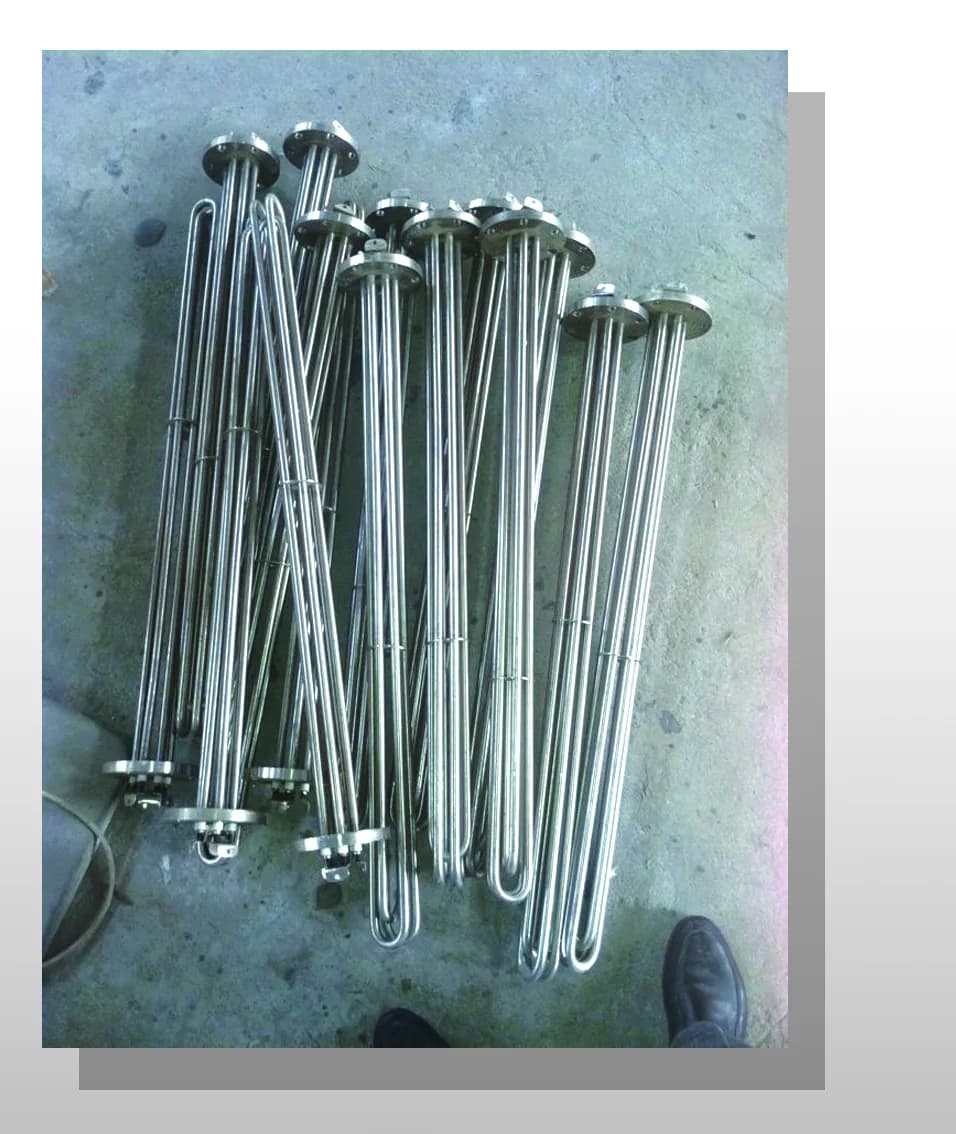
- Check the sheath for transit damage, flattening at the bends and any distortion at the fastening boss.
Installation
- Fix the element positively. The entire heated zone must be immersed in liquid or embedded in metal — dry firing is strictly prohibited.
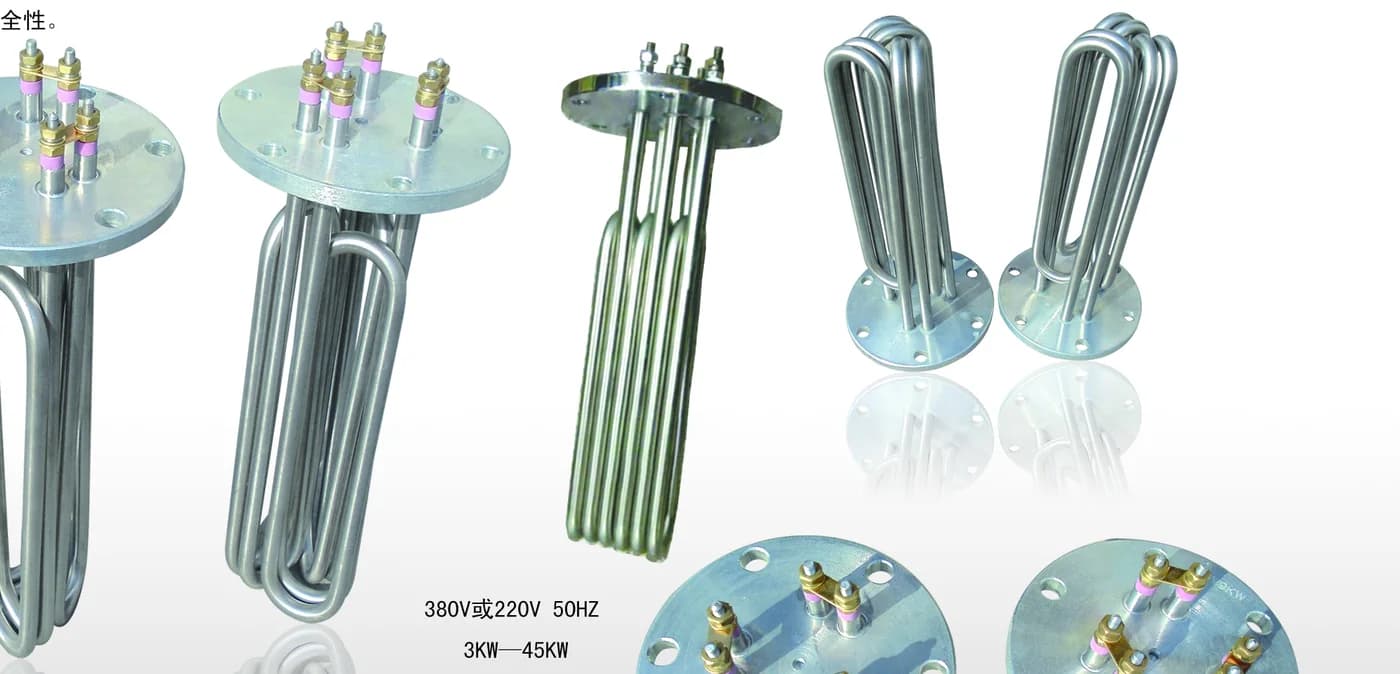
- Position the terminals outside the insulation layer, clear of corrosive, explosive and damp media, so the lead-out wire is not exposed to insulation-layer temperature.
- Hold one nut against the other when tightening terminal hardware and avoid excessive force; over-tightening loosens or damages the stud.
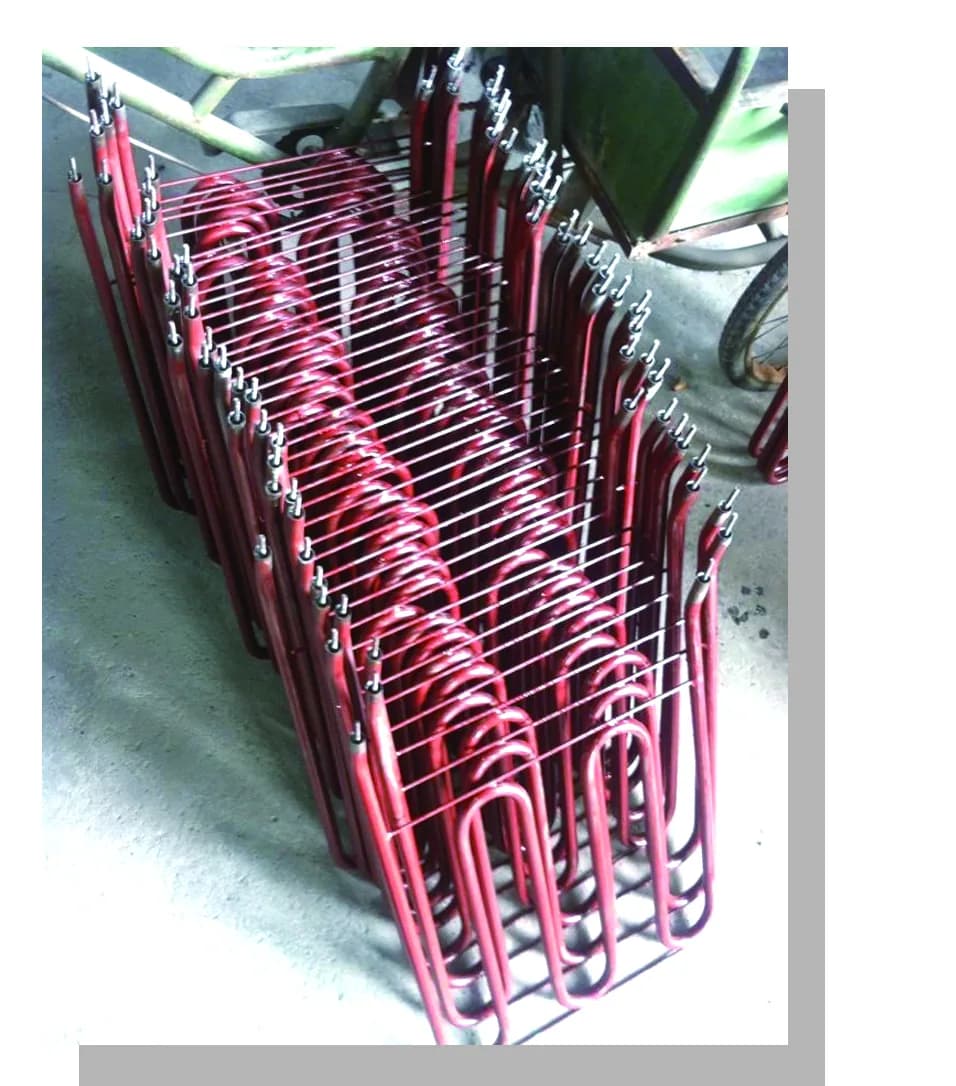
- In air heating, arrange elements in a uniform staggered pattern so every element has good dissipation conditions and the passing air is fully heated.
- Earth the sheath effectively. Working voltage must not exceed 1.1 times the rated value.
Commissioning
Where the medium is a fusible solid — nitrate salt, alkali, bitumen, paraffin wax — reduce the applied voltage until the medium has melted, then raise it to rated voltage. Applying full power to an element encased in a solid gives the heat nowhere to go and destroys the element before the bath is liquid. On nitrate baths, confirm the explosion-prevention measures are in place before the first heat.
The permitted operating envelope is: ambient relative humidity not greater than 95 %, with no explosive or corrosive gas present; working voltage not more than 1.1 times rated, with the sheath effectively earthed; insulation resistance at least 1 MΩ and dielectric strength 2 kV for one minute.
In service
- Inspect the tube surface for scale and carbon deposits and clean them off promptly — a coated sheath cannot dissipate and its life shortens accordingly.
- Keep the medium level above the minimum liquid line at all times; top up before drag-out and evaporation take it below.
- Check terminal connections for tightness and discoloration at each planned shutdown.
- Confirm the low-level and over-temperature interlocks actually break the contactor — test them, do not assume them.
Preguntas frecuentes
How do I start a bath where the medium is solid at room temperature?
Reduce the applied voltage until the medium has melted, then raise it to the rated value. This applies to nitrate salt, caustic alkali, bitumen and paraffin wax alike. Full power into an element encased in a solid destroys the element before the bath liquefies, because the heat cannot leave the sheath.
How should elements be spaced in an air-heating battery?
In a uniform staggered pattern rather than in line. Staggering gives every element the same dissipation conditions and forces the air stream to contact each of them, so the air leaves fully heated and no element sits in the wake of another running hotter than the rest.
What supply voltage tolerance is acceptable?
Working voltage must not exceed 1.1 times the rated value. Running below rated voltage is safe but reduces output roughly with the square of the voltage ratio — a 10 % undervoltage costs about 19 % of the heat, which is worth allowing for when a site's supply is known to sag.
Do the terminals need any particular protection?
They need to sit outside the insulation layer, away from corrosive, explosive and damp media, and the lead-out wire has to withstand both the terminal-end temperature and the electrical load over the long term. Terminal hardware should be tightened by holding one nut against the other, without excessive force.