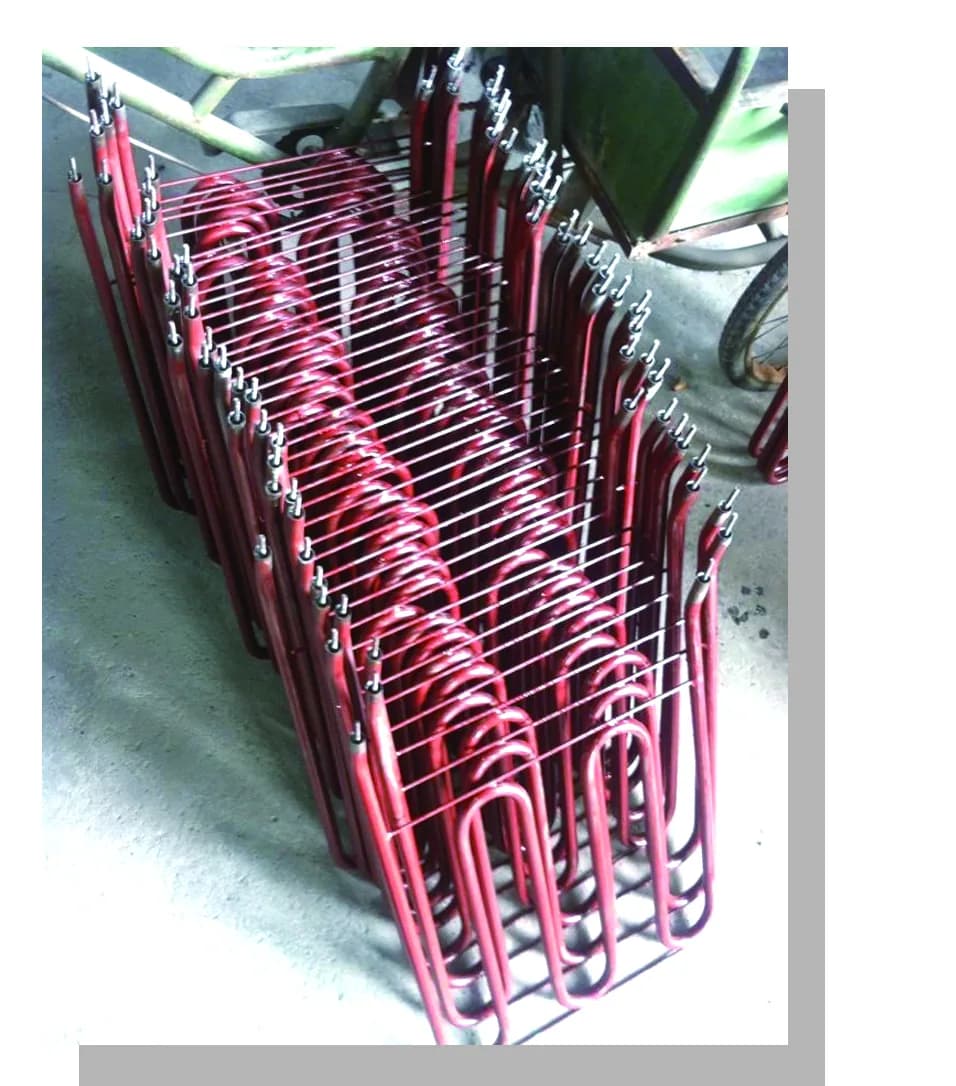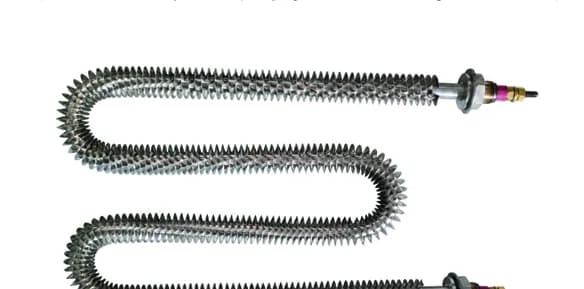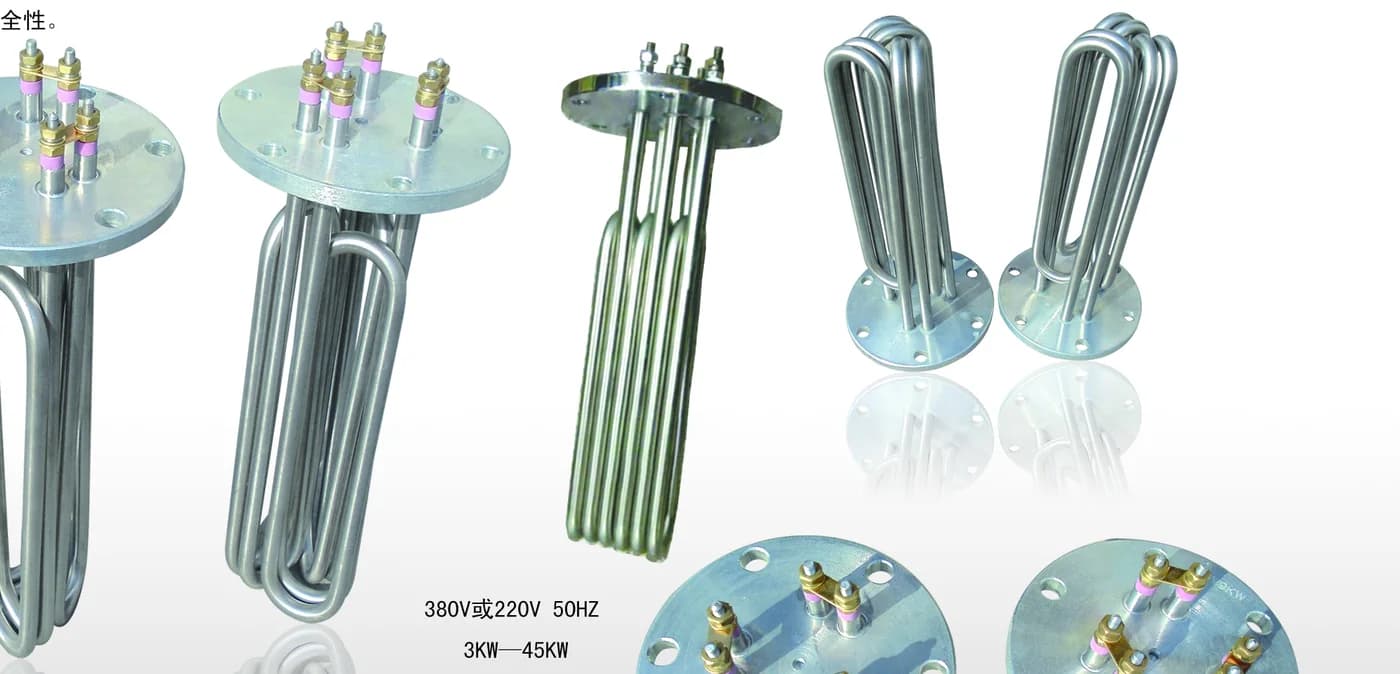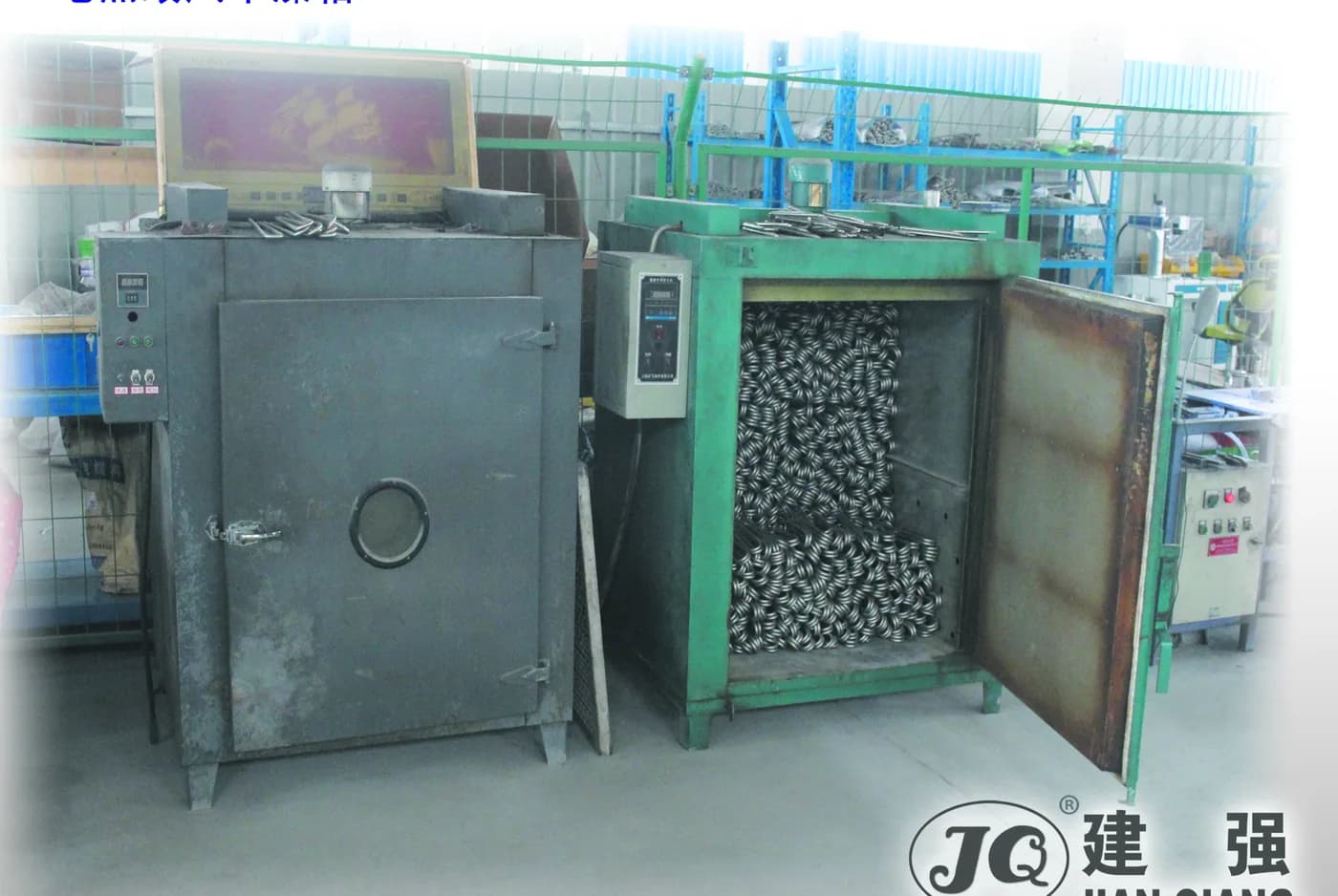
Electric blast drying ovens in the Jianqiang plant loaded with heating elements
电热鼓风干燥箱
电热鼓风干燥箱
带循环风机的强制对流烘箱,用于干燥、固化和除湿 —— 也用于烘干储存期间绝缘电阻下降的电热元件。
- Max medium temperature
- 572 °F(300 °C)
- Power range
- 1 – 15 kW
- Voltage
- 220 / 380 V, 50 Hz
- Sheath material
- 10# steel, 304 stainless
- Medium
- Air
- Mounting
- Free-standing
- Tube diameter
- 0.63 in
- Watt density guidance
- Forced convection — element sized to chamber airflow
- Lead time
- 25–45 days
- MOQ
- 1 unit
- Pricing
- On application
Design notes
强制对流干燥与固化,最高 300 °C
A blast drying oven is a heated cabinet with a fan that keeps the air moving, so temperature is uniform across the chamber instead of stratified from floor to ceiling. Tubular elements sit in the air path, the fan sweeps them continuously, and the chamber holds set-point closely enough for curing and moisture-removal work.
Jianqiang runs these ovens in-house as part of element manufacture, which is also the most useful thing to know about them: magnesium oxide is hygroscopic, and an element stored in a damp warehouse loses insulation resistance. The manufacturer's own remedy is to bake it at around 200 °C until resistance recovers, and this oven is what does that. Any workshop holding heating elements as spares has the same problem and the same fix.
Humidity sensing in the chamber deserves a note. Measurement accuracy is expensive: ±5 % RH is adequate for most non-sealed spaces, ±3 % RH is worth paying for where humidity is tracked and logged, and demanding better than ±2 % RH runs into the limits of the calibration equipment itself. Specify to the process, not to the datasheet.
Features
- 强制对流风机,箱内温度均匀
- 管状加热元件置于循环风道中
- 数显定值控制,配独立超温限制
- 可用于烘干绝缘电阻偏低的电热元件
- 箱体尺寸、层架和控制配置可定制
Typical applications
- 涂装件干燥与固化
- 库存电热元件与电机除湿
- 胶粘剂与树脂固化
- 实验室样品干燥
- 装配或灌封前预热
North American build options
- Voltage
- 120 / 208 / 240 / 277 / 480 / 600 V @ 60 Hz
- Threads
- NPT or BSP cut to order
- Flanges
- ANSI B16.5 150# / 300#
- Drawings
- Issued in inches on request
These are build options, not stock items — the catalog part numbers above are 50 Hz with metric fine threads. State what you need on the RFQ.
Part numbers & dimensions
6 catalog part numbers in the JGO series
Chamber size, shelf arrangement, temperature range and control package are configured per order. Tell us what you are drying, the load per batch and the temperature you need to hold.
Minimum order quantity for this series is 1 unit. Dimensions switch between millimetres and inches with the unit toggle in the header.
Full specification
- Max. chamber temperature
- 300 °C
- Heating
- Tubular elements in the recirculating air path
- Air circulation
- Forced convection fan
- Control
- Digital set-point with independent over-temperature limit
- Supply
- 220 V or 380 V, 50 Hz
- Power range
- 1 – 15 kW by chamber size
- Humidity sensing
- Optional; ±5 % RH standard, ±3 % RH where logged
- Element drying use
- ≈ 200 °C bake to restore insulation resistance
Questions engineers ask
Can I really restore a heating element by baking it?
Often, yes. Magnesium oxide absorbs moisture in storage, which drops insulation resistance without anything actually being broken. The manufacturer's instruction is to megger the element and, if it reads below 1 MΩ at 500 V, dry it at around 200 °C until resistance recovers. An alternative given for installed elements is to energize them at reduced voltage until the resistance comes back. Neither will fix a mechanically damaged element, but both will fix a damp one.
What humidity measurement accuracy should I specify?
Match it to the process. ±5 % RH is enough for most non-sealed spaces. ±3 % RH is worth paying for where humidity is tracked and recorded. Below ±2 % RH you are at the limits of the reference humidity generators used to calibrate the sensor — the specification stops being meaningful before the price stops rising.