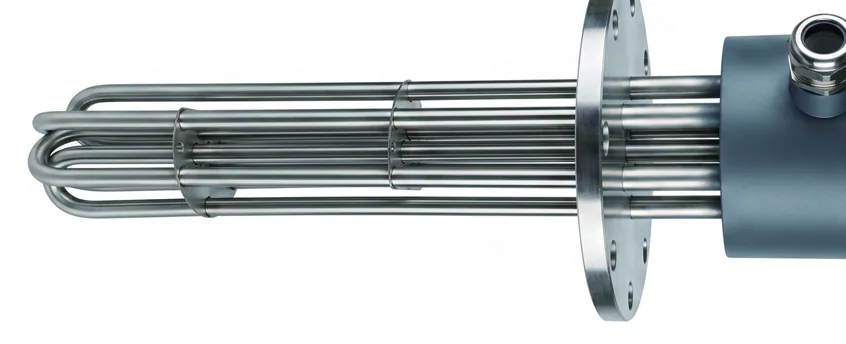
JGY flanged oil immersion heater with a cast terminal housing
Elemento de inmersión en aceite JGY
JGY 型油用管状电热元件
Elemento tubular para inmersión directa en tanques de aceite, albercas de aceite y baños de fluido térmico. Vaina de acero 10# o inoxidable, pared de 1,1–1,5 mm, rango de 100–300 °C, ensayado según JB/T 2379-93.
- Max medium temperature
- 572 °F(300 °C)
- Power range
- 1 – 8 kW
- Voltage
- 220 / 380 V, 50 Hz
- Sheath material
- 10# steel, 304 stainless, 316 stainless
- Medium
- Oil
- Mounting
- Flange, Threaded boss, Bracket
- Tube diameter
- 0.472–0.63 in
- Pressure rating
- 0–71.1 psi
- Lead time
- 15–25 days
- MOQ
- 10 units
- Pricing
- On application
Design notes
Tanques de aceite abiertos y cerrados, 1–8 kW a 220 V
JGY elements are the oil-side counterpart to the JGQ air series. The construction is the same — resistance coil, compacted MgO, swaged tube — but the wall is heavier at 1.1 to 1.5 mm and the watt density is dialled down, because oil punishes a hot sheath in a way air does not.
The three sub-series address different tank conditions. JGY2 is the general open-or-closed oil-groove element rated to a 300 °C medium temperature. JGY3 is the deep-immersion form, and its B dimension is quoted as a minimum liquid level rather than a heated length: keep the oil above that line or the element will run dry. JGY4 is intended for circulating oil at up to 100 °C, where flow carries heat away and a higher rating fits in a shorter element.
The failure mode to design around is carbonization. A film of oil sits against the sheath; if that film gets hot enough it cracks into carbon, and carbon is an insulator, so the next layer runs hotter still. Once that runaway starts the element is finished. Keeping density low, keeping the element fully submerged, and cleaning scale and carbon off the tube during maintenance are what buy service life.
Features
- Pared gruesa de 1,1–1,5 mm como margen de corrosión del lado aceite
- JGY2 hasta 300 °C; JGY4 calificado para aceite en circulación hasta 100 °C
- Presión de trabajo JGY2(4) inferior a 5 kg/cm² (0,49 MPa), barreno de montaje 172 mm
- Vida útil ensayada según JB/T 2379-93, con varios índices por encima de la norma nacional
- Montaje con brida, buje roscado o soporte
Typical applications
- Baños de temple y revenido en aceite
- Circuitos de calentamiento con aceite térmico
- Precalentamiento de depósitos de lubricante e hidráulicos
- Calentamiento de tanques de asfalto
- Freidoras de grado alimenticio
North American build options
- Voltage
- 120 / 208 / 240 / 277 / 480 / 600 V @ 60 Hz
- Threads
- NPT or BSP cut to order
- Flanges
- ANSI B16.5 150# / 300#
- Drawings
- Issued in inches on request
These are build options, not stock items — the catalog part numbers above are 50 Hz with metric fine threads. State what you need on the RFQ.
Part numbers & dimensions
11 catalog part numbers in the JGY series
For the JGY3 sub-series the B column is the minimum liquid level, not the heated length. Keep oil above this line at all times. A/B/C are nominal; approved-drawing dimensions govern.
Minimum order quantity for this series is 10 units. Dimensions switch between millimetres and inches with the unit toggle in the header.
Full specification
- Sheath material
- 10# steel, 304 or 316 stainless
- Wall thickness
- 1.1 – 1.5 mm
- Working temperature
- 100 – 300 °C by sub-series
- JGY2 max. medium temperature
- 300 °C
- JGY4 max. medium temperature
- 100 °C (circulating oil)
- Working pressure, JGY2(4)
- < 5 kg/cm² (0.49 MPa)
- Mounting hole, JGY2(4)
- 172 mm
- Voltage
- 220 V (380 V three-phase builds on request)
- Power range
- 1 – 8 kW per element
- Standard
- JB/T 2379-93
Questions engineers ask
What watt density is safe for heating oil?
For mineral and heat-transfer oil, keep the sheath below about 3 W/cm². Above that the oil film in contact with the tube begins to crack into carbon, and because carbon insulates, each successive layer runs hotter than the last. That runaway is the single most common cause of premature failure in oil service. Vegetable and food-grade oils are less tolerant still and want closer to 2 W/cm².
What happens if the oil level drops below the element?
It burns out, usually within minutes. Air removes heat roughly two orders of magnitude more slowly than oil, so an exposed heated zone climbs past the sheath limit almost immediately. Every oil installation should have a low-level cut-out wired to break the heater contactor — that interlock costs far less than the element and the tank clean-up.
Which sub-series do I need — JGY2, JGY3 or JGY4?
JGY2 is the general-purpose element for open or closed oil grooves up to a 300 °C medium temperature. JGY3 is the deep-immersion form for tall tanks, and its catalog B dimension is a minimum liquid level rather than a heated length. JGY4 is for flowing, circulating oil up to 100 °C, where the flow lets a shorter element carry 5 to 8 kW.
Can these be used with thermal-transfer fluid rather than mineral oil?
Yes, and it is common — but tell us the fluid by name when you inquire. Synthetic heat-transfer fluids differ widely in film temperature limit, and the safe watt density follows the fluid, not the tube. We size the heated length to the fluid's published maximum film temperature.
Commonly specified with
Related series
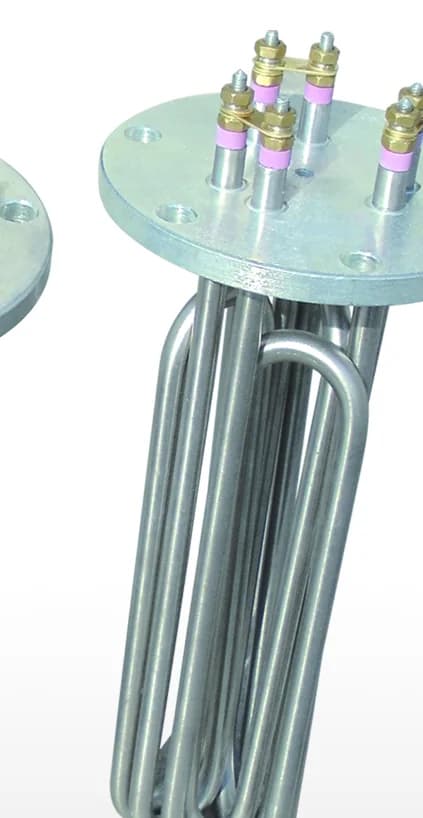 JGSSegún plano
Resistencia de inmersión JGS para calderas y agua
Montaje con brida o rosca, sellado para 0,8–4 MPa
- Temp. máx.
- 320 °F
- Potencia
- 1–45 kW
- Núm. de parte
- 13
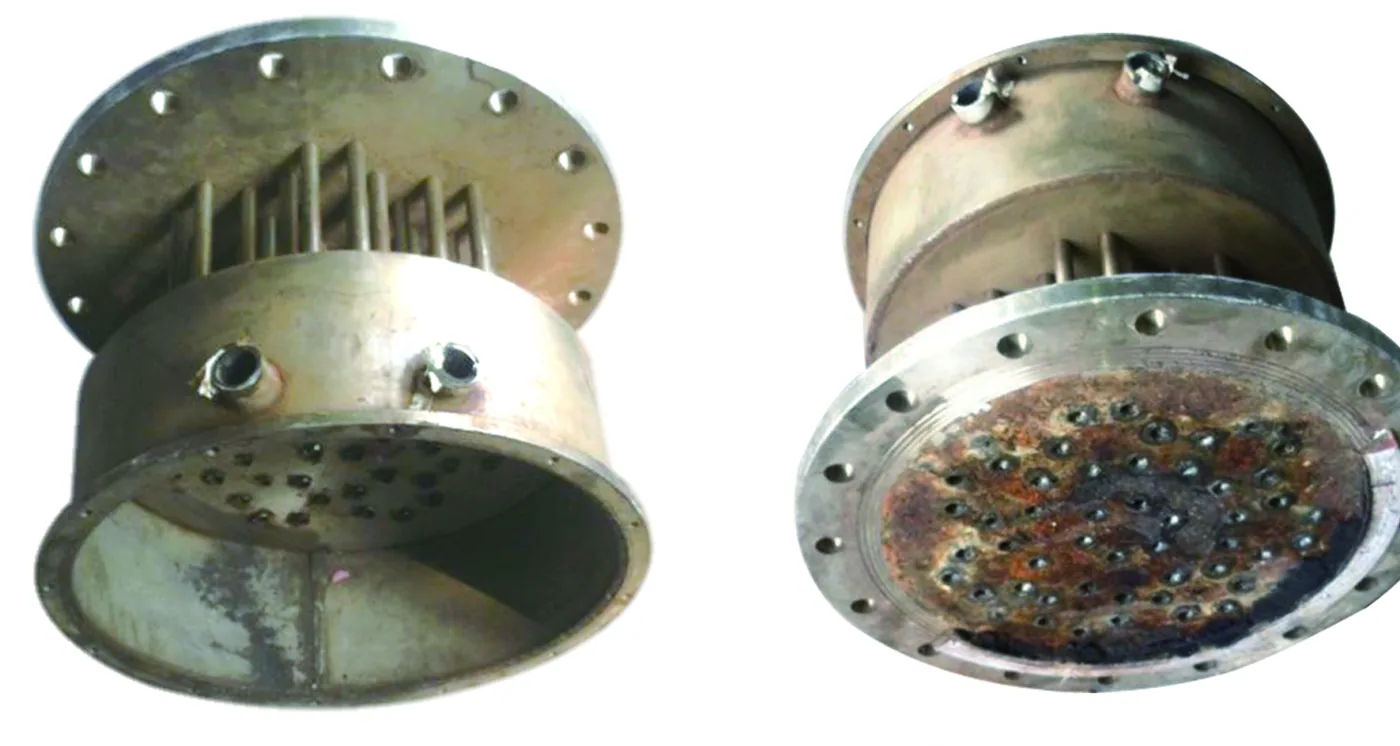 JGBSegún plano
Resistencia de inmersión antideflagrante con brida
Caja antideflagrante, flujo deflectado, límite alto independiente
- Temp. máx.
- 842 °F
- Potencia
- 3–200 kW
- Núm. de parte
- 8
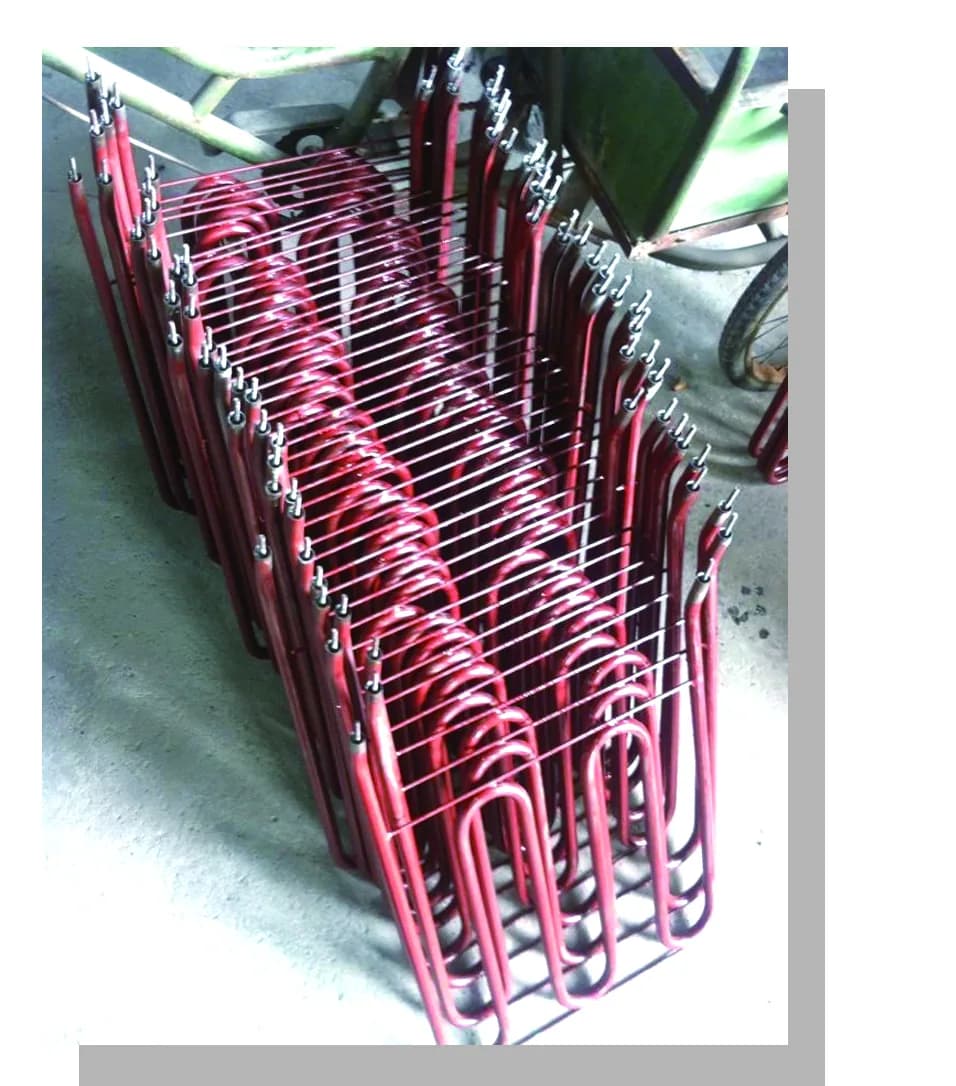 JGQSegún plano
Elemento tubular JGQ para aire
Seis geometrías de doblez, 0,25–3,0 kW, de 36 V a 380 V
- Temp. máx.
- 572 °F
- Potencia
- 0.25–3 kW
- Núm. de parte
- 24