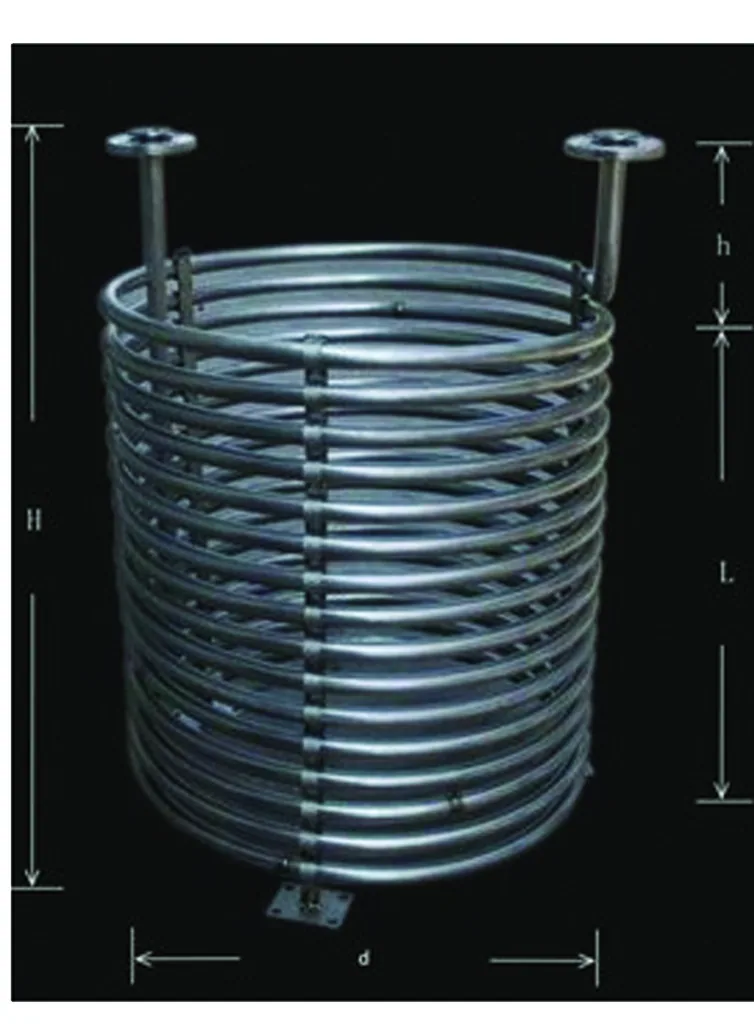
Cage-form steam coil with dimensioned height and drum diameter
Serpentín de vapor y de proceso
蒸汽管 / 盘管
Tubo devanado en hélice, jaula o espiral plana para alojar un recorrido largo de transferencia de calor en un tanque compacto. Para vapor, aceite térmico, calentamiento de agua y enfriamiento de líquidos; devanado a diámetro, paso y tipo de conexión.
- Max medium temperature
- 572 °F(300 °C)
- Power range
- Unheated — medium supplied
- Voltage
- —
- Sheath material
- 304 stainless, 316 stainless, 10# steel, titanium, copper
- Medium
- Steam, Oil, Water
- Mounting
- Free-standing, Flange, Bracket
- Tube diameter
- 0.315–0.984 in
- Pressure rating
- 0–232 psi
- Lead time
- 20–35 days
- MOQ
- 1 unit
- Pricing
- On application
Design notes
Serpentines helicoidales y planos devanados para su recipiente
A coil solves a geometry problem. A tank needs a lot of heat-transfer surface but has very little room for it, so the tube is wound into a helix, a cage or a flat pancake and the surface goes in vertically instead of horizontally. The same coil serves as a heater when steam or hot oil passes through it, and as a cooler when chilled water does.
Because drum diameter, pitch, tube bore, number of turns and connection style are all dictated by the vessel it goes into, coil work is essentially always made to order. Standard offerings include the single helix, the double coil where two circuits are wound together so heating and cooling can share the same space, and small-diameter coils for compact vessels.
Materials follow the duty: 304 or 316 stainless for food, pharmaceutical and general process work, carbon steel for utility service, titanium for plating chemistry and seawater. Tell us the medium inside the tube and the medium outside it — the two are often different and both drive the material choice.
Features
- Formas de hélice sencilla, serpentín doble, jaula y espiral plana
- Devanado a su diámetro, paso y número de vueltas
- Servicio de calentamiento o enfriamiento con la misma geometría
- Tubo de 304, 316, acero al carbono, titanio o cobre
- Conexiones roscadas, bridadas o de extremo liso
Typical applications
- Calentamiento de tanques con vapor y serpentines de aceite térmico
- Serpentines de enfriamiento en baños de galvanoplastia y anodizado
- Apoyo a chaquetas de fermentadores y reactores
- Serpentines de condensación y recuperación de calor
- Calentadores de agua compactos e insertos de interacumulador
North American build options
- Voltage
- 120 / 208 / 240 / 277 / 480 / 600 V @ 60 Hz
- Threads
- NPT or BSP cut to order
- Flanges
- ANSI B16.5 150# / 300#
- Drawings
- Issued in inches on request
These are build options, not stock items — the catalog part numbers above are 50 Hz with metric fine threads. State what you need on the RFQ.
Part numbers & dimensions
8 catalog part numbers in the JGC series
Coils carry no electrical rating — they are unheated tube through which a hot or cold medium passes. Send drum diameter, pitch, turn count, tube bore, both media and the connection detail with your inquiry.
Minimum order quantity for this series is 1 unit. Dimensions switch between millimetres and inches with the unit toggle in the header.
Full specification
- Tube material
- 304 / 316 stainless, 10# steel, titanium, copper
- Tube diameter
- Ø8 – Ø25 mm
- Forms
- Single helix, double coil, cage, flat spiral
- Duty
- Steam, thermal oil, hot water, chilled water
- Working pressure
- To 1.6 MPa depending on tube and material
- Connections
- Threaded, flanged or plain end
- Manufacture
- Made to drawing — no stock sizes
Questions engineers ask
Can one coil both heat and cool a tank?
One coil can do either at different times if you switch the medium, but running both duties through a single circuit means the whole thermal mass has to be flushed each time you change over — slow and wasteful. The usual answer is a double coil: two circuits wound together in the same space, one carrying steam or hot oil, the other chilled water. Plating lines that heat to reach temperature and then cool to hold it are the classic case.
What do you need to quote a coil?
Drum diameter, pitch, number of turns or overall height, tube outside diameter and wall, the medium inside the tube, the medium in the tank, working pressure and temperature, the material, and how the ends terminate. Photographs or a sketch of the existing coil are just as useful as a drawing if you are replacing one.
Do you supply coils in titanium?
Yes. Titanium coils are common in plating and anodizing tanks, both as cooling coils and as steam heating coils, because they resist the chloride and weak-acid chemistry that pits stainless. Running the coil in the same metal as the immersion heater also avoids introducing a second dissolved metal into the bath.
Commonly specified with
Related series
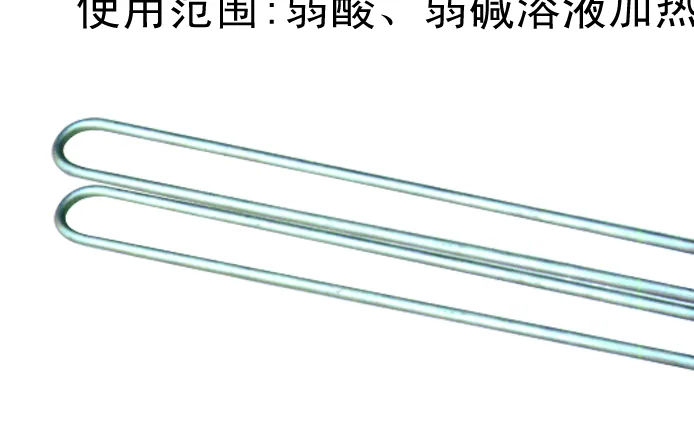 JGS-TiSegún plano
Resistencia de inmersión de titanio
Servicio con ácidos y álcalis débiles hasta 100 °C
- Temp. máx.
- 212 °F
- Potencia
- 0.5–12 kW
- Núm. de parte
- 7
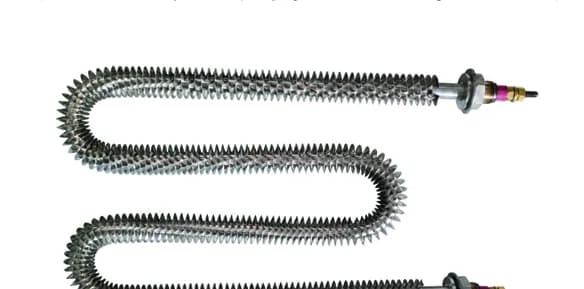 JGFSegún plano
Resistencia tubular aletada para aire
Tres veces la superficie en el mismo ancho de ducto
- Temp. máx.
- 572 °F
- Potencia
- 0.5–6 kW
- Núm. de parte
- 8
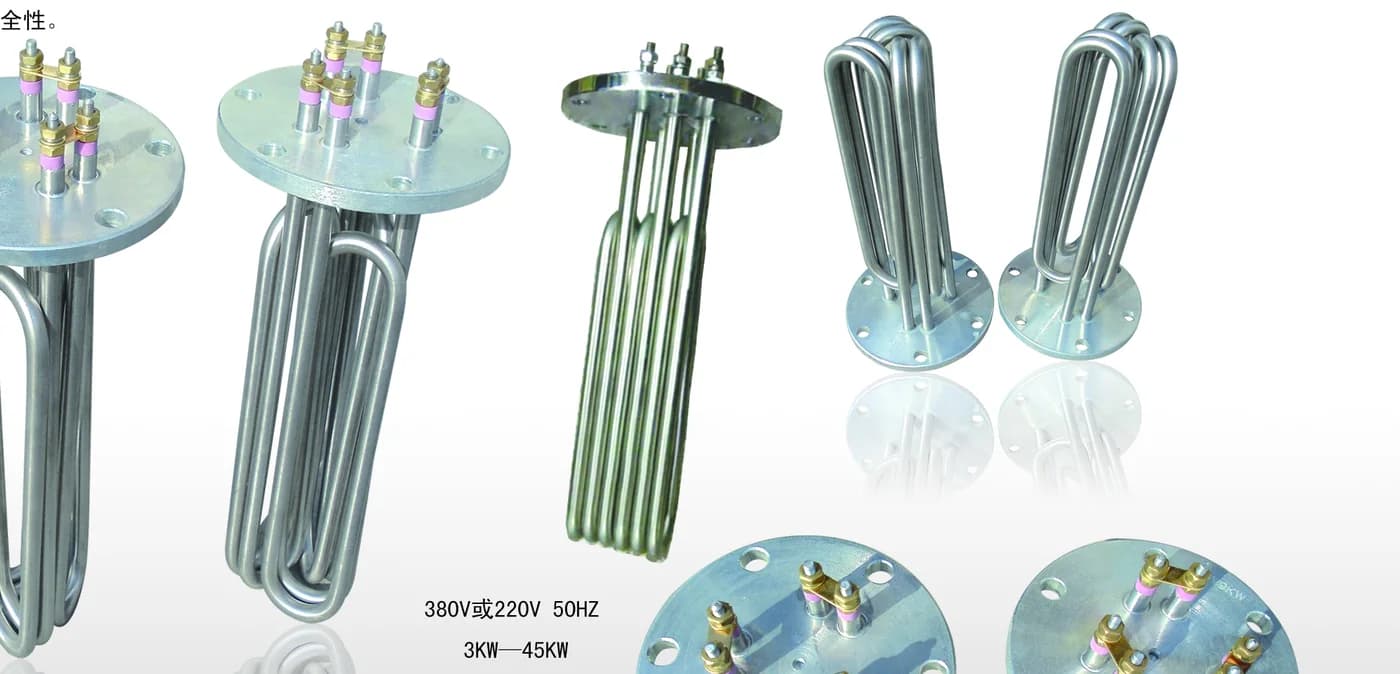 JGGSegún plano
Generador de vapor eléctrico
Unidades empaquetadas de 3 a 45 kW a 220 V o 380 V, 50 Hz
- Temp. máx.
- 356 °F
- Potencia
- 3–45 kW
- Núm. de parte
- 10