Manufacturing
Eight steps from tube stock to a marked, tested element.
Dainan is the stainless-steel processing cluster of eastern China, which is why the plant sits here — tube stock, alloy supply and finishing are all local. What is not local is done in-house: filling, swaging, forming, annealing and test.
- 20+
- Years forming heating elements
- 10,000 h
- Design life, standard series
- 0.8–4 MPa
- Sealed pressure range
- 36–380 V
- Standard voltage envelope
01Process
The route a tube takes through the plant.
In production order. Each step exists because skipping it produces a specific failure downstream.
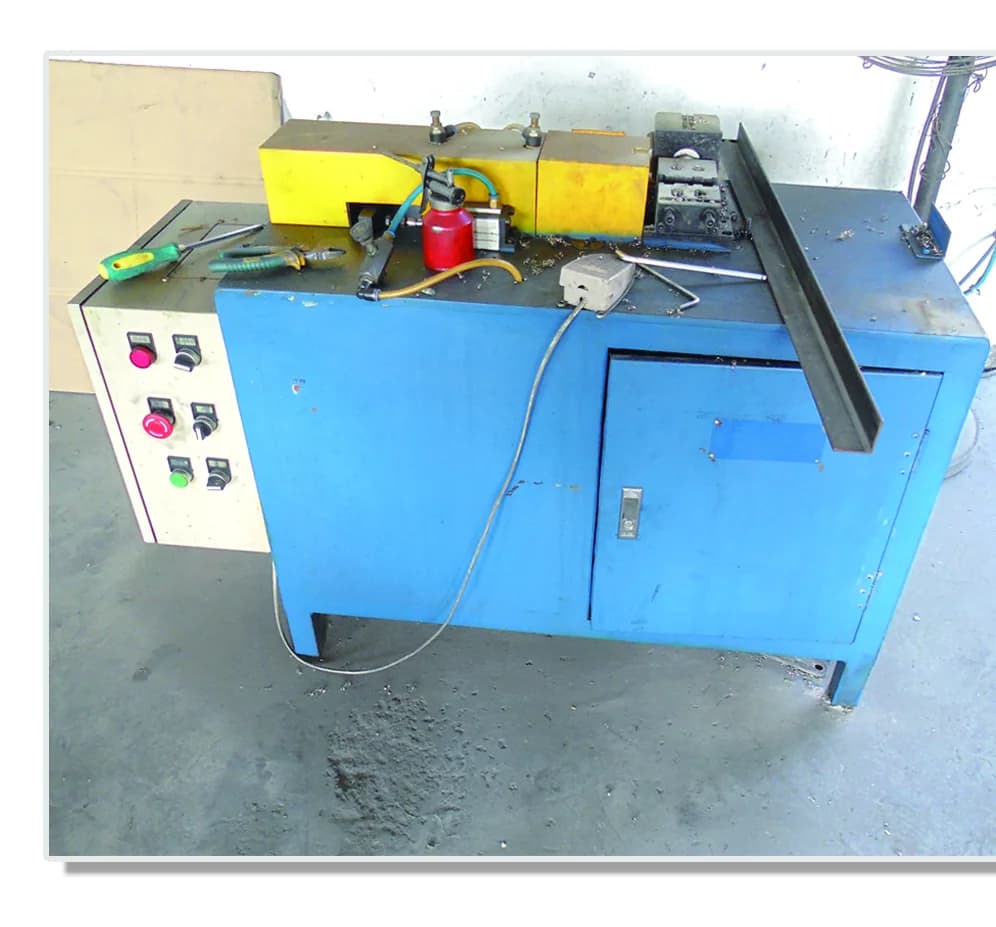
Step 01
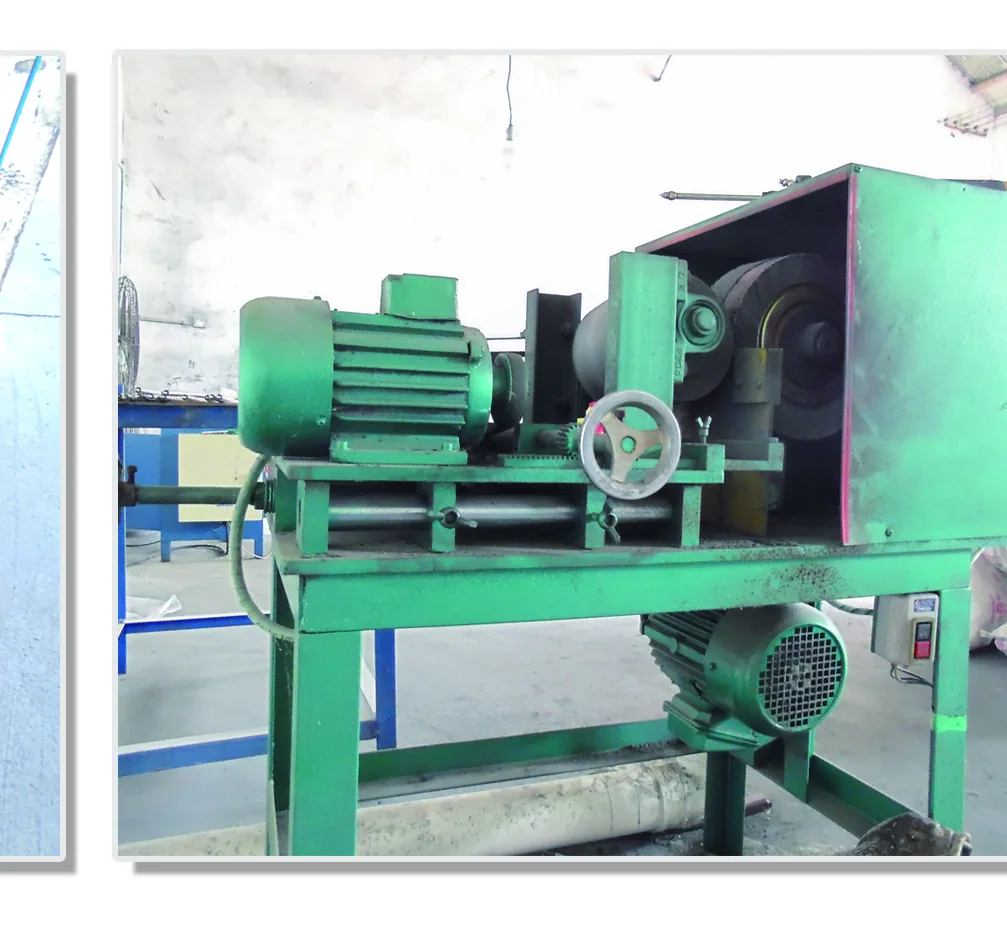
Tube preparation
Incoming tube is peeled and polished on dedicated machines before anything else happens to it. A clean, uniform outside diameter is what lets the later swaging step reduce the tube evenly — surface defects at this stage become stress risers in a formed element.
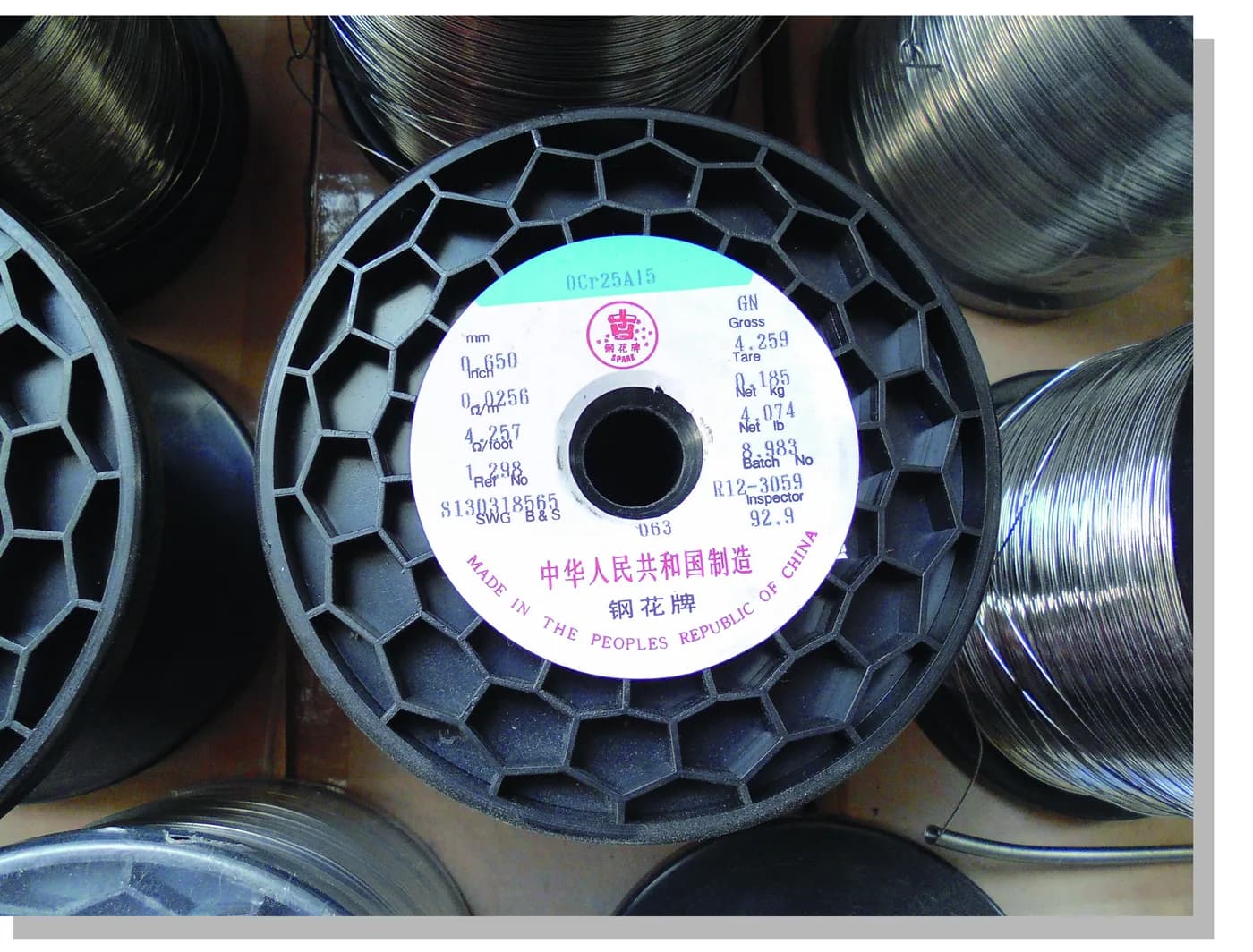
Step 02
Coil winding & wire
Resistance wire is wound to the calculated pitch. All heating wire is 0Cr25Al5 iron-chrome-aluminum from Beijing Ganghua. Nickel-chrome runs to about 1250 °C and iron-chrome-aluminum to about 1450 °C; the surface anti-oxidation treatment used here gives an insulating layer 3–12 µm thick that withstands over 50 V AC and 500–6000 cold-hot shock cycles without deforming.
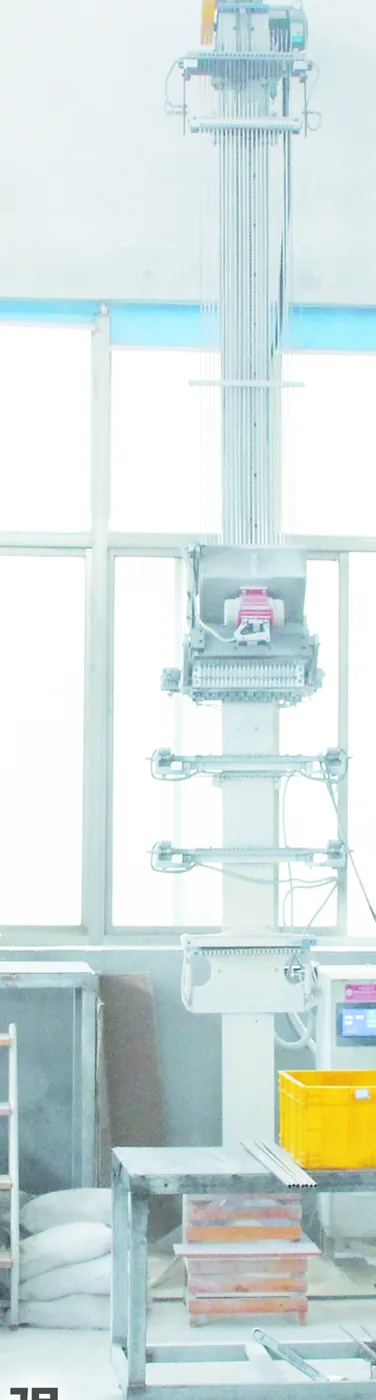
Step 03
Automatic MgO filling
The annulus between coil and sheath is packed with crystalline fused magnesium oxide on an automatic filling column. MgO is the compromise that makes the whole product work: a good conductor of heat and a good electrical insulator at once. Fill density decides both dielectric strength and how fast heat leaves the coil.
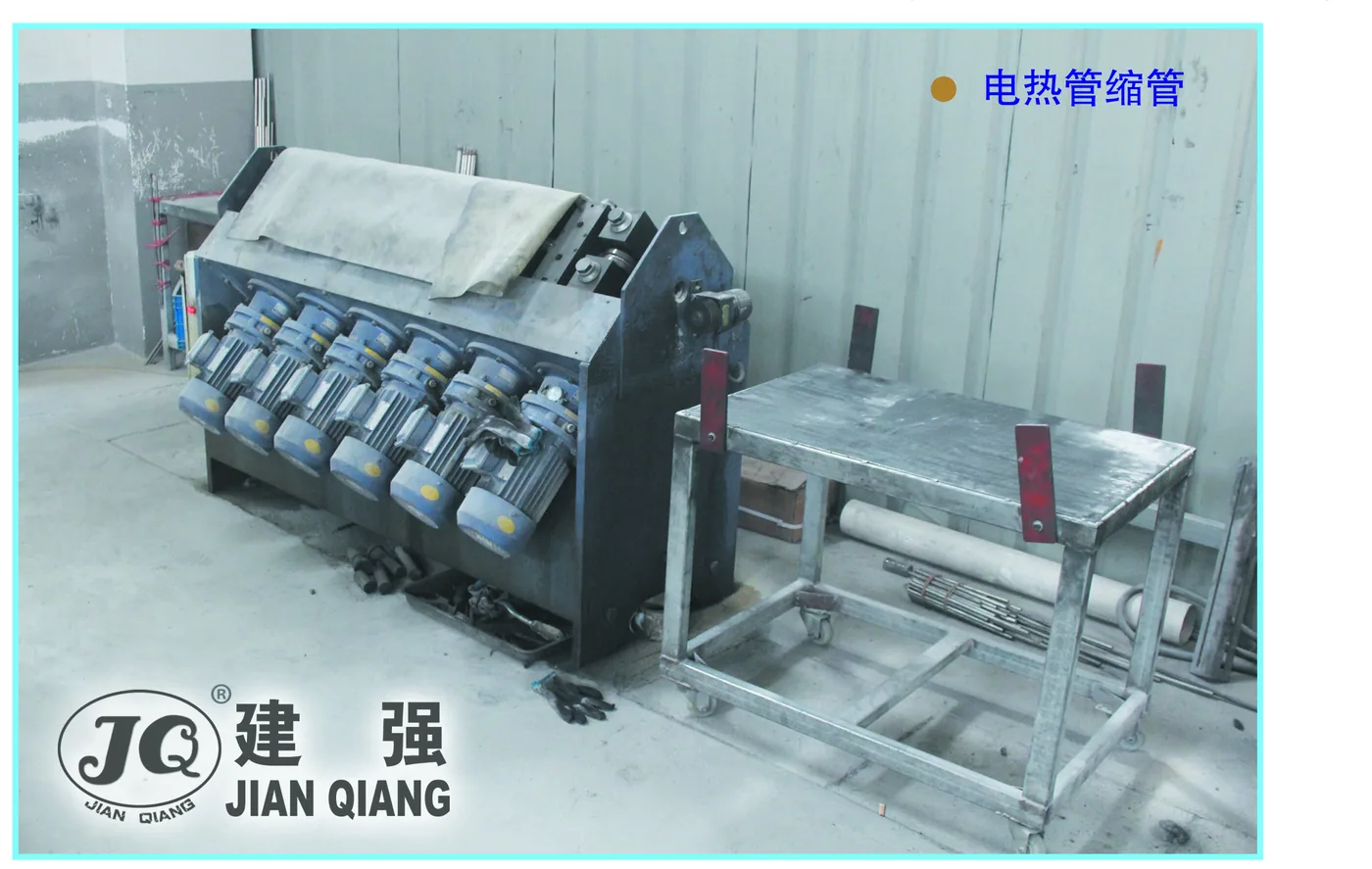
Step 04
Multi-station swaging
The filled tube is drawn down through successive reducing stations. Compacting the MgO is what converts a loosely filled tube into a solid, mechanically strong element — it raises dielectric strength, improves thermal conduction, and locks the coil so it cannot shift under thermal cycling.
Step 05
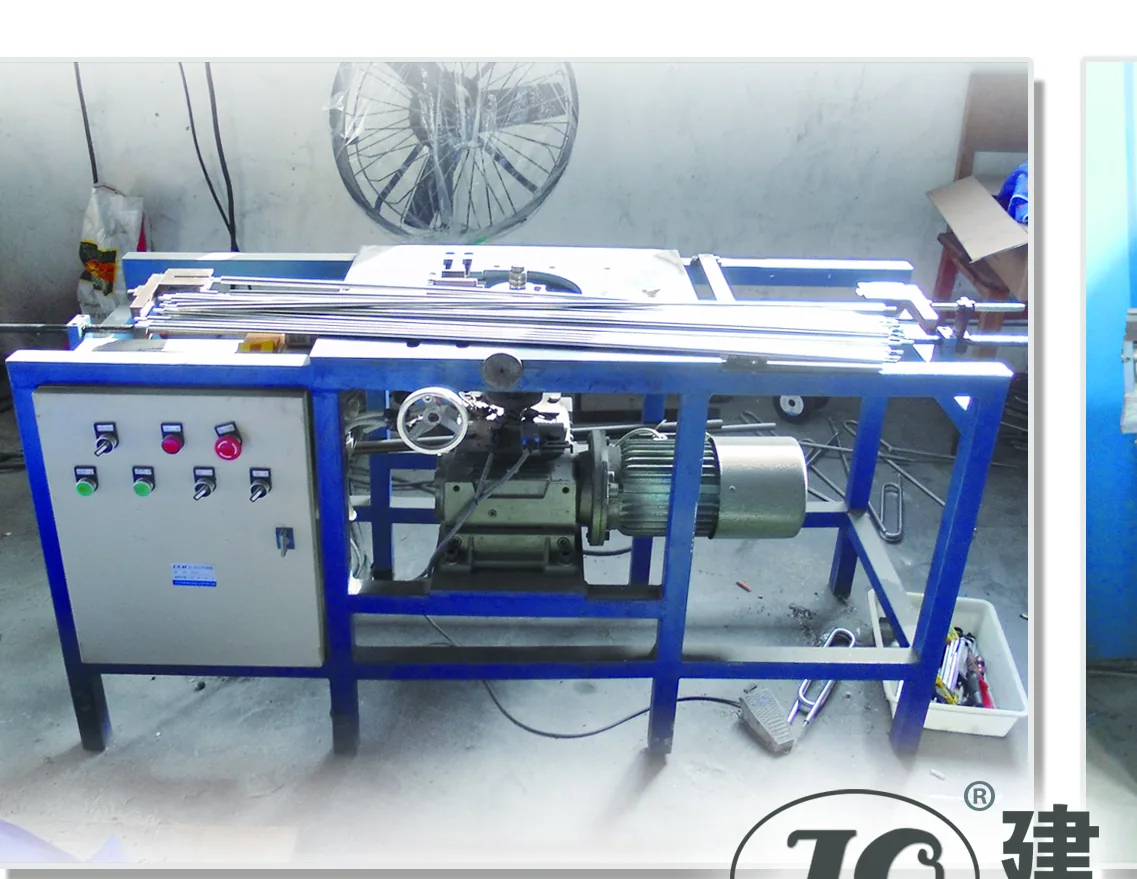
CNC bending & annealing
Hairpins, W-bends and serpentines are formed on automatic benders. Where a bend is tight enough to work-harden the sheath, a localized annealing station softens just that zone first — bending compacted tube cold is how cracks start.
Step 06
Blackening & finishing
Stainless parts that need it are blackened: degreased at pH 13 for at least half an hour, water-rinsed, acid-cleaned at pH 3 for under ten minutes, rinsed again, blackened in a pH 2–4 bath for about ten minutes, then dried and oiled. The oxide film raises surface hardness and wear resistance without affecting anything inside the tube.
Step 07
Test & laser marking
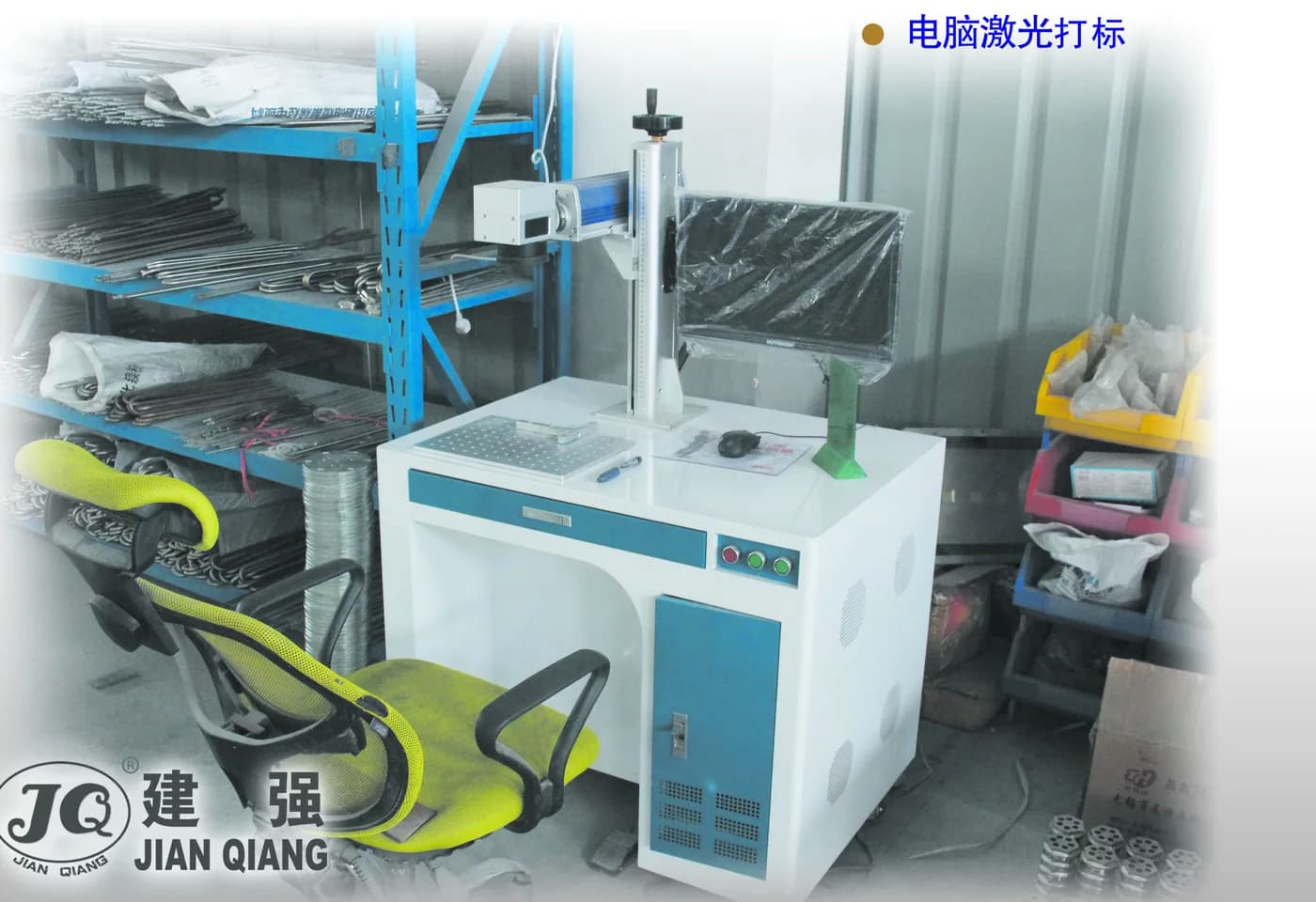
Every element is meggered and dielectric-tested before it leaves — insulation resistance at least 1 MΩ at 500 V DC, and 2 kV for one minute. Part numbers are laser-marked rather than stamped or labelled, so an OEM can identify a spare years later from the element itself.
Step 08
Drying, packing & storage
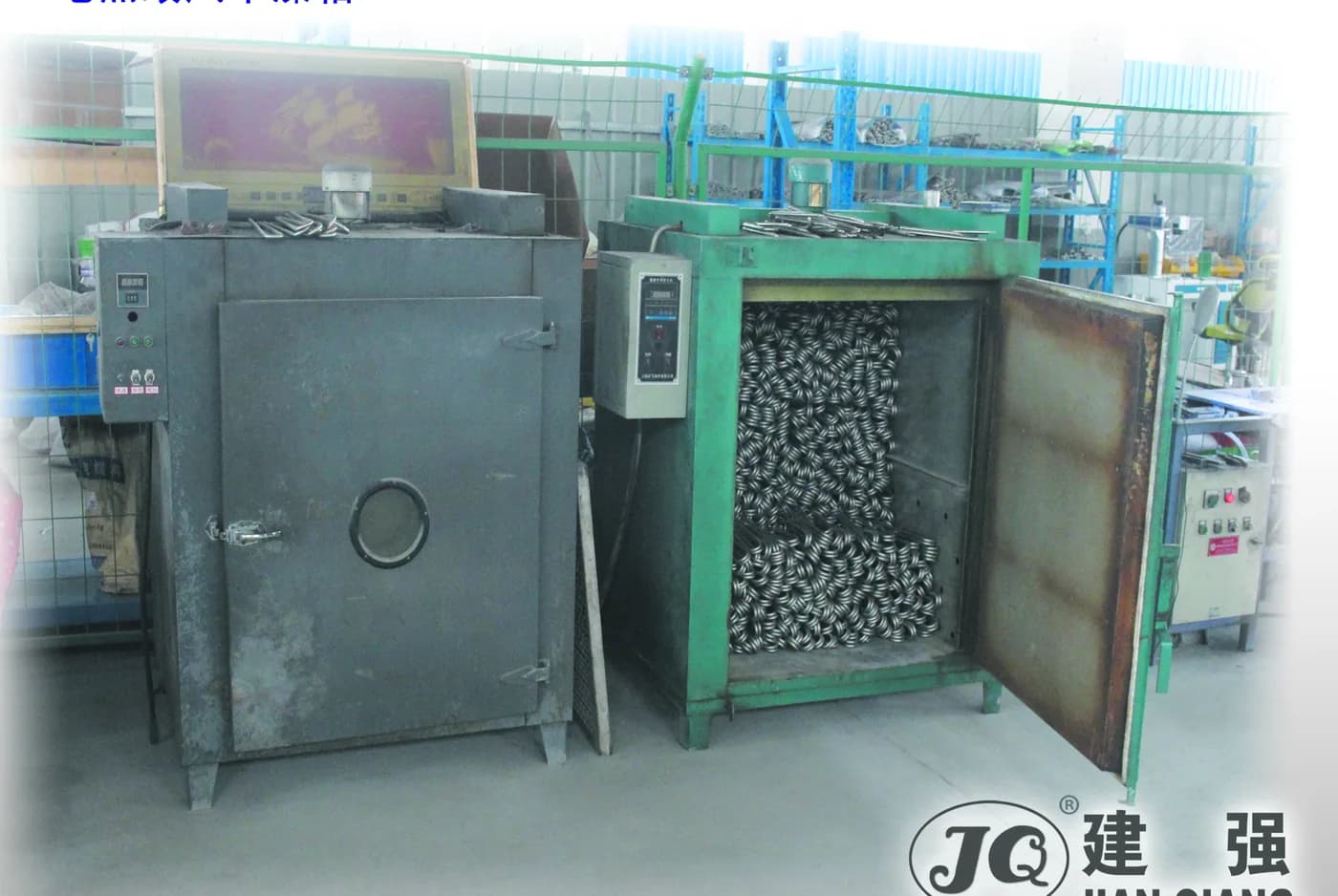
Finished elements are held in a dry store, because magnesium oxide is hygroscopic and insulation resistance falls in damp conditions. Blast drying ovens on site bake elements at around 200 °C to restore resistance where it has dropped below 1 MΩ — the same remedy we tell customers to use on their own shelf stock.
02Materials
What goes into the tube.
Sheath alloy is chosen from the medium, not the temperature — a point the selection guide makes at length. The store carries carbon steel, the common stainless grades, titanium and copper so that alloy choice is a specification decision rather than a lead-time one.
Sheath material selection guide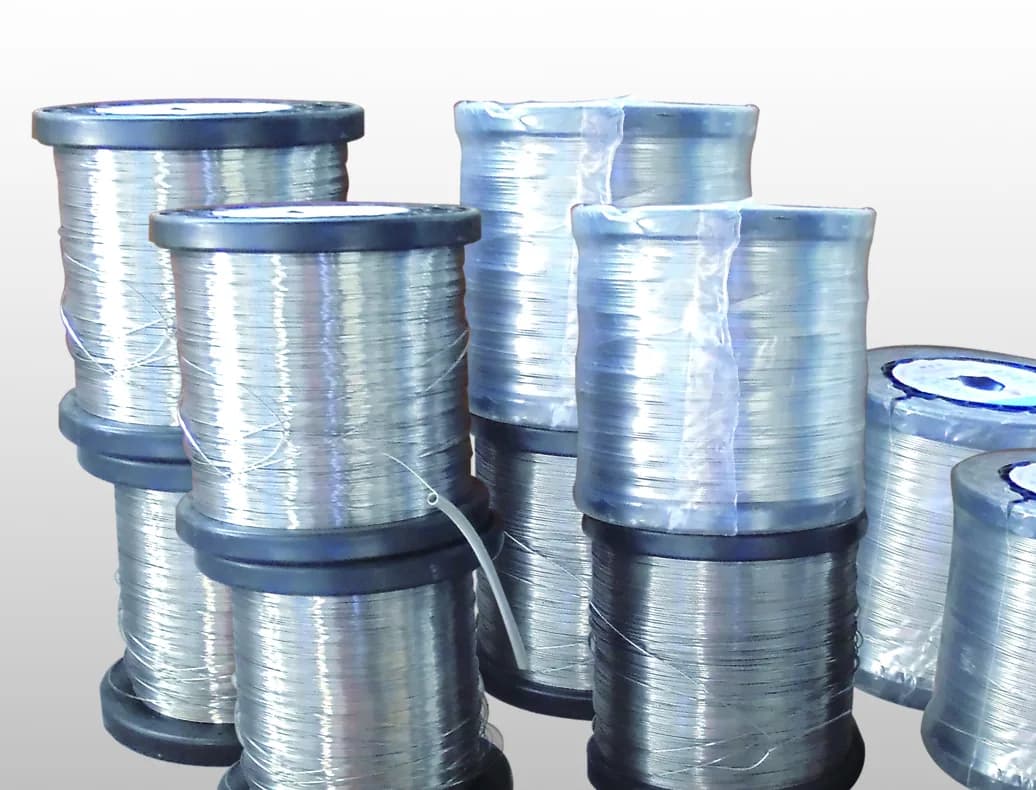
0Cr25Al5 resistance wire
Beijing Ganghua brand, used across the tubular range
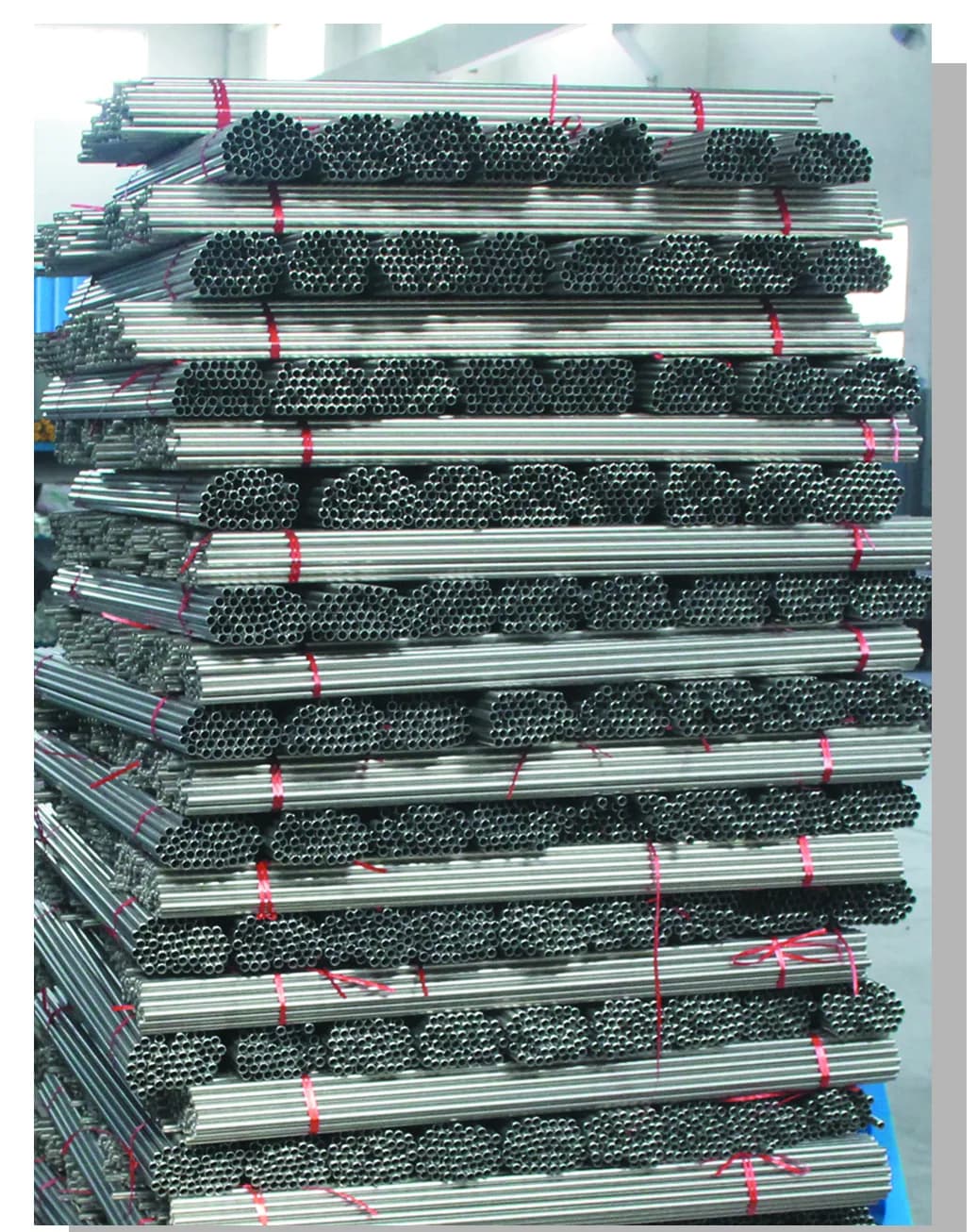
10# and 20# steel tube
Air, oil and closed-circuit water service
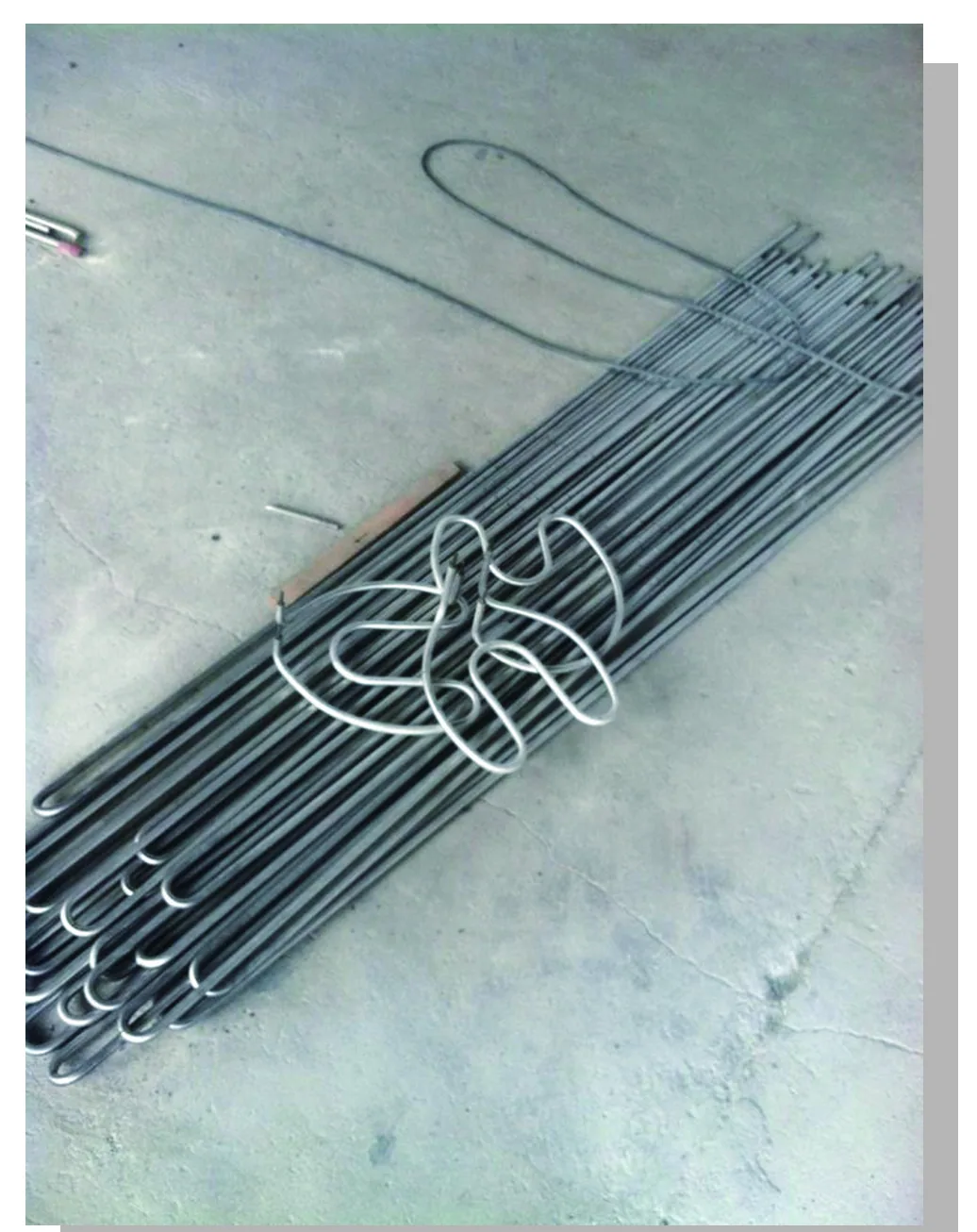
304 / 316 / 316L stainless
Open water, chloride service, food and pharma
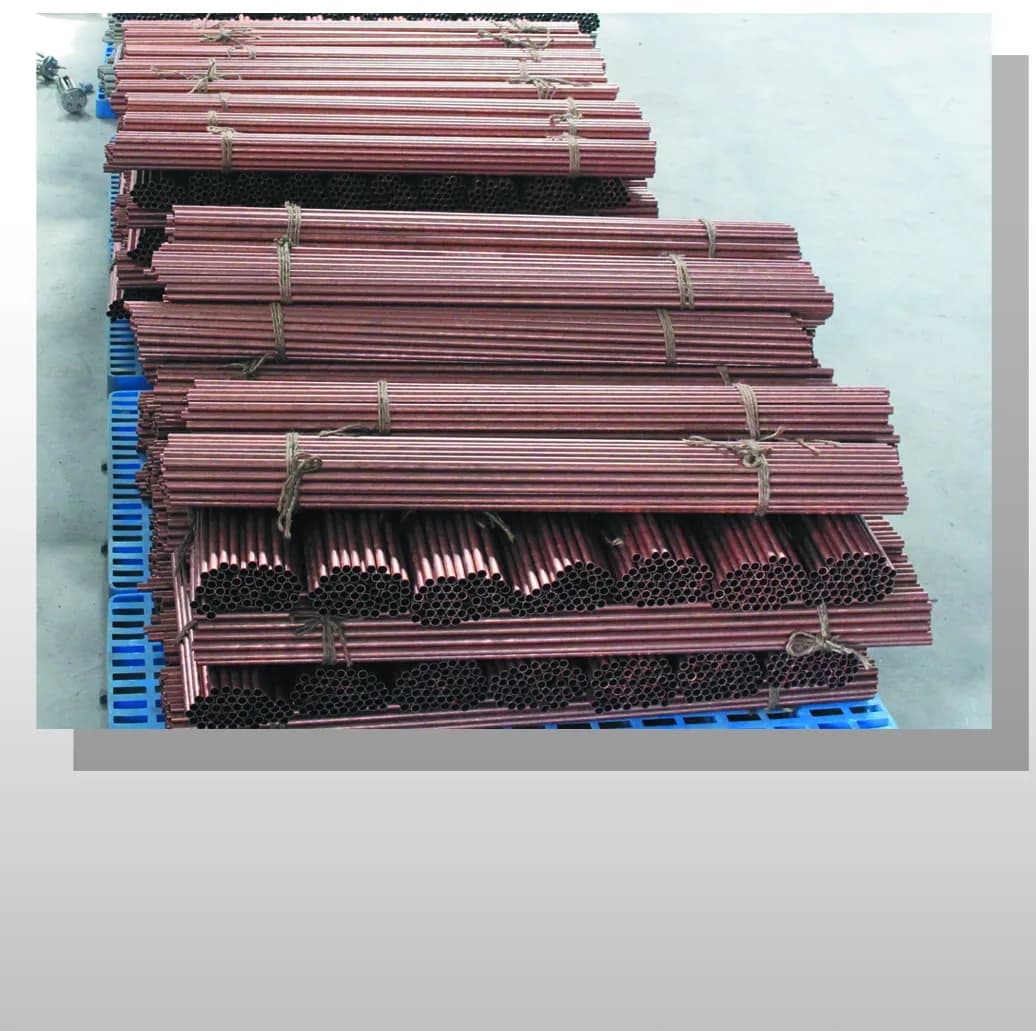
Titanium and copper tube
Plating chemistry, seawater and utility coils
03Quality control
What is measured, and what it means.
- JB/T 2379-93
- Metal-sheathed tubular heating elements (China machinery standard)
- The tubular series are built and life-tested to this standard; the manufacturer states several indices exceed it.
- Insulation resistance ≥ 1 MΩ
- Measured at 500 V DC before dispatch
- Elements below this figure are dried at approximately 200 °C (392 °F) until resistance recovers.
- Dielectric strength 2 kV / 1 min
- Withstand test at final inspection
- Applied with the sheath earthed; working voltage limited to 1.1 × rated.
- 0Cr25Al5 resistance wire
- Iron-chrome-aluminum alloy, Beijing Ganghua brand
- Named supplier and grade for the resistance wire used across the tubular range.
04Questions
About how these are made.
Do you make the whole element in-house, or assemble bought-in parts?
The whole element. Tube peeling and polishing, coil winding, magnesium-oxide filling, multi-station swaging, CNC bending, localized annealing, blackening, testing and laser marking all happen on site in Dainan, Jiangsu. The resistance wire is bought in — 0Cr25Al5 from Beijing Ganghua — and the tube stock is sourced from the surrounding stainless-steel cluster.
Why does swaging matter so much?
Because it compacts the magnesium oxide. A filled but unswaged tube has loose powder around the coil: poor dielectric strength, poor heat conduction, and a coil free to shift under thermal cycling. Drawing the tube down through reducing stations compresses that fill into a solid ceramic body, which is what gives the finished element its mechanical strength, its 2 kV dielectric rating and its heat-transfer performance.
What testing happens before dispatch?
Insulation resistance is measured at 500 V DC and must read at least 1 MΩ, and a 2 kV dielectric withstand test is applied for one minute with the sheath earthed. Elements reading low on insulation resistance are dried at around 200 °C until they recover rather than being shipped or scrapped. Flanged and boiler assemblies are additionally hydrostatically tested.
Can you laser-mark our own part numbers on the element?
Yes. Marking is done on a computer laser station, so customer part numbers, drawing references, batch codes and dates can all be applied. For OEMs this matters more than it sounds — a heater identified by a stick-on label is unidentifiable after two years in a hot enclosure.