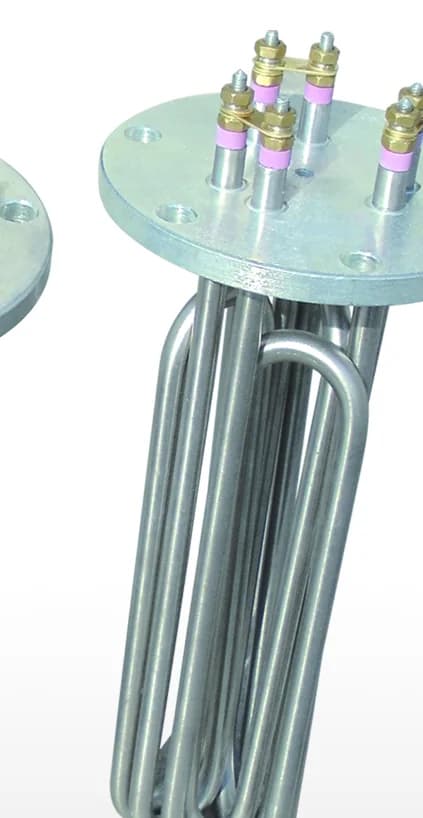
JGS flanged immersion heater bundle rated 3 to 45 kW at 380 V or 220 V
JGS Boiler & Water Immersion Heater
JGS 型锅炉用管状电热元件
Immersion heating assembly for boiler feed and circulating hot water to 160 °C. 20# steel, 304, 316 or 316L tube, supplied as a flange-mounted bundle or a threaded single element.
- Max medium temperature
- 320 °F(160 °C)
- Power range
- 1 – 45 kW
- Voltage
- 220 / 380 V, 50 Hz
- Sheath material
- 20# steel, 304 stainless, 316 stainless, 316L stainless
- Medium
- Water, Steam
- Mounting
- Flange, Threaded boss
- Tube diameter
- 0.472–0.63 in
- Pressure rating
- 116–580 psi
- Lead time
- 18–30 days
- MOQ
- 5 units
- Pricing
- On application
Design notes
Flange or threaded mount, sealed for 0.8–4 MPa
JGS assemblies heat water inside a pressure vessel — a hot-water boiler, a calorifier, a buffer tank or a steam generator shell. The heated element is the same tubular construction used across the range; what changes is the pressure boundary. A machined flange with a gasket face, or a threaded boss with a sealing washer, carries the seal and the assembly is hydro-tested before dispatch.
Material choice follows water chemistry rather than temperature. 20# carbon steel is adequate for closed, chemically treated circuits where oxygen is scavenged and make-up is minimal. Open circuits, softened water, and anything with meaningful chloride content should go to 304, and 316 or 316L where chlorides are high — a stainless immersion heater in the wrong grade pits along the waterline faster than carbon steel would.
The other design decision is scale. Hard water deposits carbonate on the sheath, and like carbon in oil it insulates: the element runs hotter under the deposit until the coil fails. In hard-water regions specify a lower watt density and plan for descaling access, or feed the vessel through a softener.
Features
- Sealed installation rated 0.8 – 4 MPa
- 20# steel, 304, 316 or 316L sheath to suit water chemistry
- Flange-mounted bundles or threaded single elements
- Bundle assemblies from 3 kW to 45 kW at 220 V or 380 V, 50 Hz
- Hydro-tested and megger-tested before dispatch
Typical applications
- Electric hot-water boilers and calorifiers
- Steam generator shells
- Process water and CIP tank heating
- District and buffer-tank top-up heating
- Freeze protection on outdoor water vessels
North American build options
- Voltage
- 120 / 208 / 240 / 277 / 480 / 600 V @ 60 Hz
- Threads
- NPT or BSP cut to order
- Flanges
- ANSI B16.5 150# / 300#
- Drawings
- Issued in inches on request
These are build options, not stock items — the catalog part numbers above are 50 Hz with metric fine threads. State what you need on the RFQ.
Part numbers & dimensions
13 catalog part numbers in the JGS series
Bundle assemblies are configured per order: flange standard and size, element count, sheath grade, terminal enclosure and thermostat pocket are all set at drawing approval. Send your flange detail with the inquiry.
Minimum order quantity for this series is 5 units. Dimensions switch between millimetres and inches with the unit toggle in the header.
Full specification
- Sheath material
- 20# steel, 304, 316 or 316L stainless
- Max. water temperature
- 160 °C
- Sealed pressure rating
- 0.8 – 4 MPa
- Mounting
- Machined flange or threaded fastening boss
- Assembly power
- 3 – 45 kW typical bundle
- Voltage
- 220 V or 380 V, 50 Hz
- Terminal seal
- Silicone with optional IP54 terminal box
- Insulation resistance
- ≥ 1 MΩ at 500 V DC
- Standard
- JB/T 2379-93
Questions engineers ask
Do I need stainless steel, or will carbon steel do?
It depends on the water, not the temperature. Closed, chemically treated circuits with scavenged oxygen and little make-up run fine on 20# carbon steel. Open circuits, softened water and anything carrying chloride should be 304, moving to 316 or 316L as chloride rises. Getting this wrong shows up as pitting along the waterline within months.
How does hard water shorten element life?
Calcium carbonate deposits on the sheath and insulates it. Heat that used to leave into the water is now trapped, so the coil temperature climbs under the scale until it fails — the element is destroyed by its own output. In hard-water areas specify a lower watt density, leave descaling access, or soften the feed.
What pressure rating can you seal to?
Standard flange and threaded builds seal from 0.8 to 4 MPa, and every assembly is hydro-tested before dispatch. Send us the vessel's design pressure and the flange standard you work to — DIN, ANSI, JIS or GB — and we will match the mating face rather than supplying a flange you then have to adapt.
Can you fit a thermostat or thermowell into the assembly?
Yes. A thermowell in the flange face, a capillary thermostat pocket, or a bulb well positioned in the bundle are all standard options. Say what control device you intend to use and we will place the pocket where it reads the water rather than the sheath — a common installation error that makes control hunt.
Commonly specified with
Related series
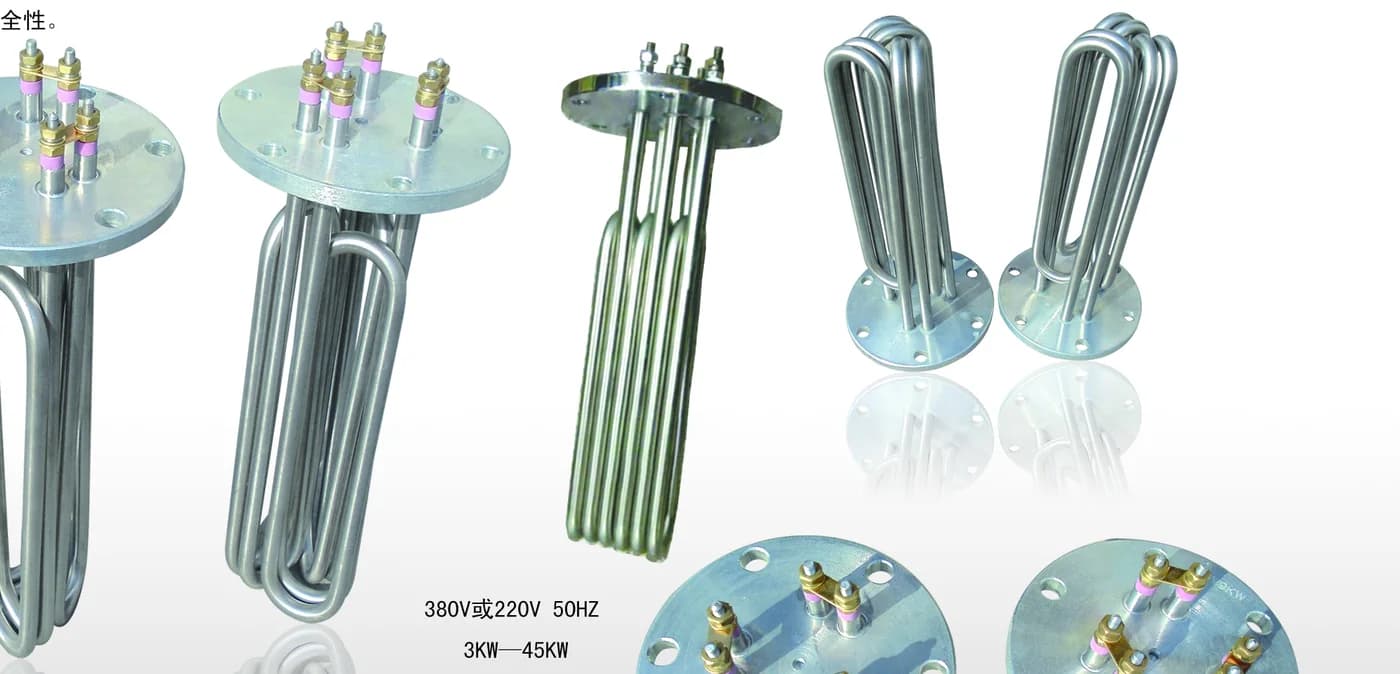 JGGTo drawing
Electric Steam Generator
3 to 45 kW packaged units at 220 V or 380 V, 50 Hz
- Max temp
- 356 °F
- Power
- 3–45 kW
- Part numbers
- 10
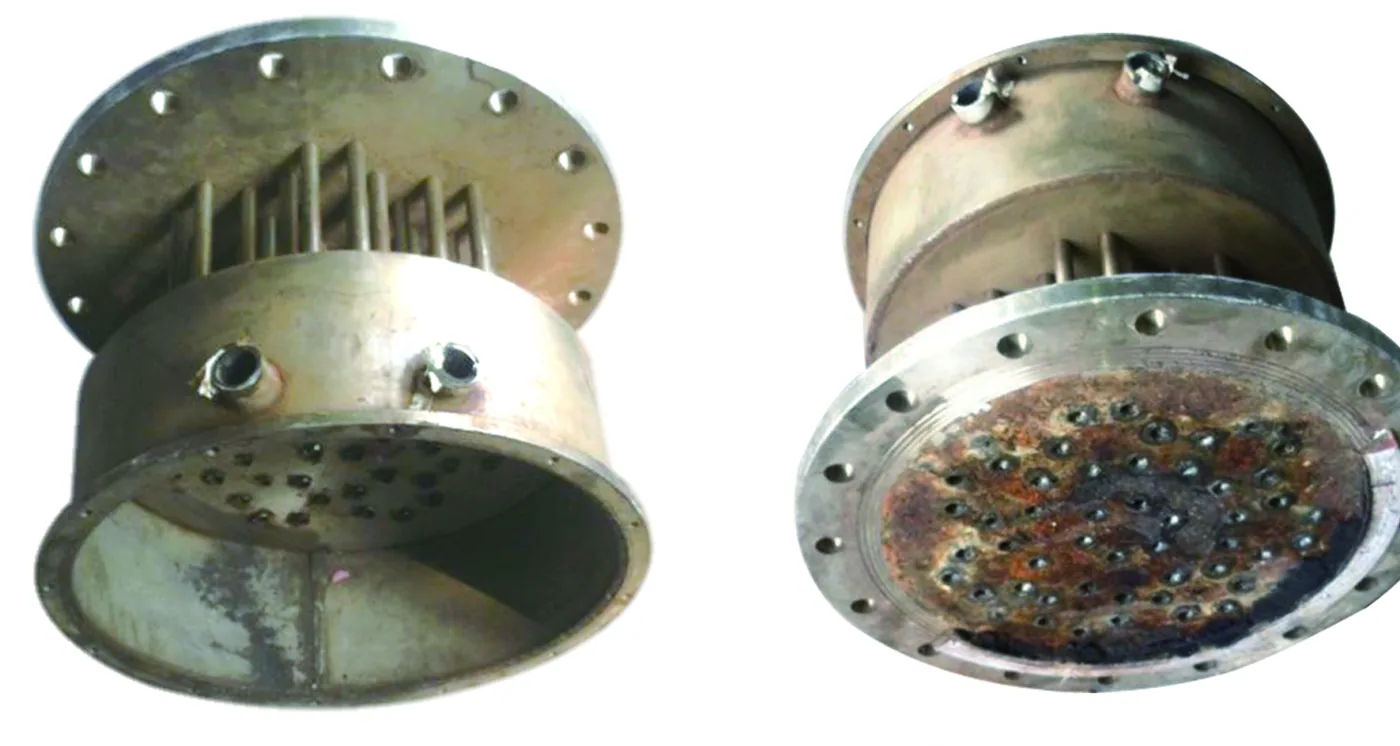 JGBTo drawing
Explosion-Proof Flanged Immersion Heater
Flameproof enclosure, baffled flow path, independent high-limit
- Max temp
- 842 °F
- Power
- 3–200 kW
- Part numbers
- 8
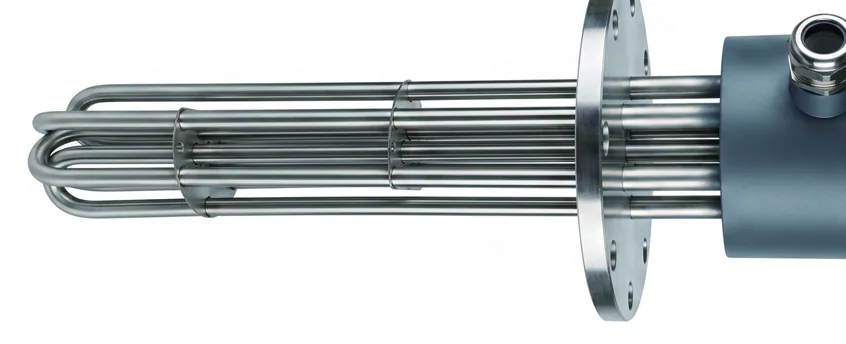 JGYTo drawing
JGY Oil Immersion Heating Element
Open and sealed oil tanks, 1–8 kW at 220 V
- Max temp
- 572 °F
- Power
- 1–8 kW
- Part numbers
- 11