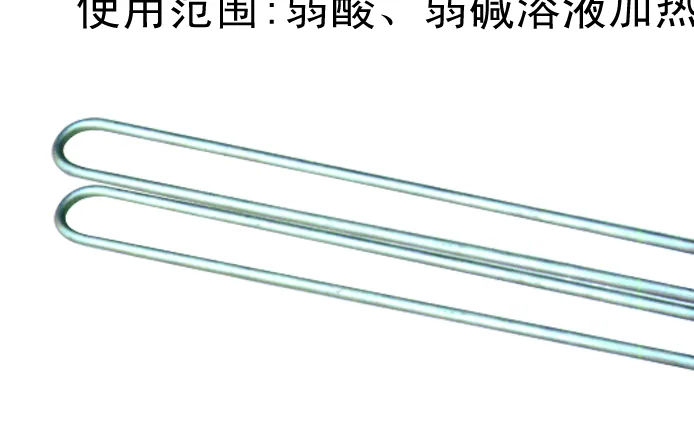
Titanium immersion heating elements for weak acid and weak alkali tanks
Titanium Immersion Heater
钛管加热器
Titanium-sheathed tubular element for plating, pickling, anodizing and chloride-bearing tanks where stainless steel pits. Formed to your tank geometry; also supplied as unheated titanium tube for steam heating and liquid cooling.
- Max medium temperature
- 212 °F(100 °C)
- Power range
- 0.5 – 12 kW
- Voltage
- 220 / 380 V, 50 Hz
- Sheath material
- titanium
- Medium
- Acid, Water
- Mounting
- Bracket, Flange, Free-standing
- Tube diameter
- 0.472–0.63 in
- Watt density guidance
- ≤ 3 W/cm² (19 W/in²) in aqueous solution
- Lead time
- 20–32 days
- MOQ
- 5 units
- Pricing
- On application
Design notes
Weak acid and weak alkali service to 100 °C
Titanium's usefulness in a plating shop comes from a passive oxide film that reforms the instant it is damaged. That film shrugs off chlorides, weak acids and weak alkalis at concentrations that would pit 316 stainless within weeks, which makes titanium the default sheath for anodizing, nickel plating, chromate and many pickling tanks.
The practical ceiling is around 100 °C in solution. Above that, and in a few specific chemistries — hydrofluoric acid and hot concentrated reducing acids in particular — titanium loses its advantage and PTFE cladding becomes the correct answer instead.
The same tube is supplied unheated as a cooling coil or steam heating coil. Plating lines frequently need both in the same tank — heat to reach the bath temperature, then cooling to hold it once the rectifier load builds — and running both duties in titanium avoids introducing a second metal into the bath.
Features
- Grade 2 titanium sheath — self-repairing passive oxide film
- Weak acid and weak alkali service to 100 °C
- JGS4, JGS1 and custom bend forms to your tank layout
- Also supplied unheated as a steam heating or liquid cooling coil
- PTFE-clad terminal option where splash reaches the cold ends
Typical applications
- Electroplating and anodizing tanks
- Pickling and passivation lines
- Chromate and phosphate conversion baths
- Rinse-water and DI-water heating
- Seawater and chloride-bearing process water
North American build options
- Voltage
- 120 / 208 / 240 / 277 / 480 / 600 V @ 60 Hz
- Threads
- NPT or BSP cut to order
- Flanges
- ANSI B16.5 150# / 300#
- Drawings
- Issued in inches on request
These are build options, not stock items — the catalog part numbers above are 50 Hz with metric fine threads. State what you need on the RFQ.
Part numbers & dimensions
7 catalog part numbers in the JGS-Ti series
Titanium work is made to the tank. Send the internal tank dimensions, the solution and its concentration, the operating temperature and how the element will be supported, and we will form it to fit.
Minimum order quantity for this series is 5 units. Dimensions switch between millimetres and inches with the unit toggle in the header.
Full specification
- Sheath material
- Grade 2 titanium
- Max. medium temperature
- 100 °C
- Chemistry
- Weak acid, weak alkali, chloride-bearing solutions
- Not suitable for
- Hydrofluoric acid; hot concentrated reducing acids
- Standard forms
- JGS4, JGS1 and custom
- Voltage
- 220 V or 380 V, 50 Hz
- Power range
- 0.5 – 12 kW per element
- Unheated variant
- Titanium coil for steam heating or liquid cooling
Questions engineers ask
Titanium or PTFE — which does my plating tank need?
Titanium if the bath is a weak acid, weak alkali or chloride-bearing solution running at or below 100 °C; it conducts well, takes a normal watt density and lasts. PTFE if the chemistry is a strong acid or alkali that eats titanium, accepting a 80 °C ceiling and a much lower watt density in exchange for near-total chemical inertness. If the bath contains hydrofluoric acid, it is PTFE — titanium has no useful resistance to HF.
Can the same titanium element heat and cool?
Not the same element, but the same material. A heated titanium element brings the bath up, and an unheated titanium coil carrying chilled water holds it down once the rectifier load starts adding heat. Running both duties in titanium keeps a second metal out of the bath, which matters in plating chemistry where dissolved metal contaminates the deposit.
How should a titanium element be supported in the tank?
On PTFE or polypropylene brackets, never on a dissimilar metal in contact with the solution — a galvanic couple in a conductive bath will corrode the less noble partner. Position the element so drag-out and evaporation cannot expose the heated zone, and keep the terminals well clear of the splash line.
Commonly specified with
Related series
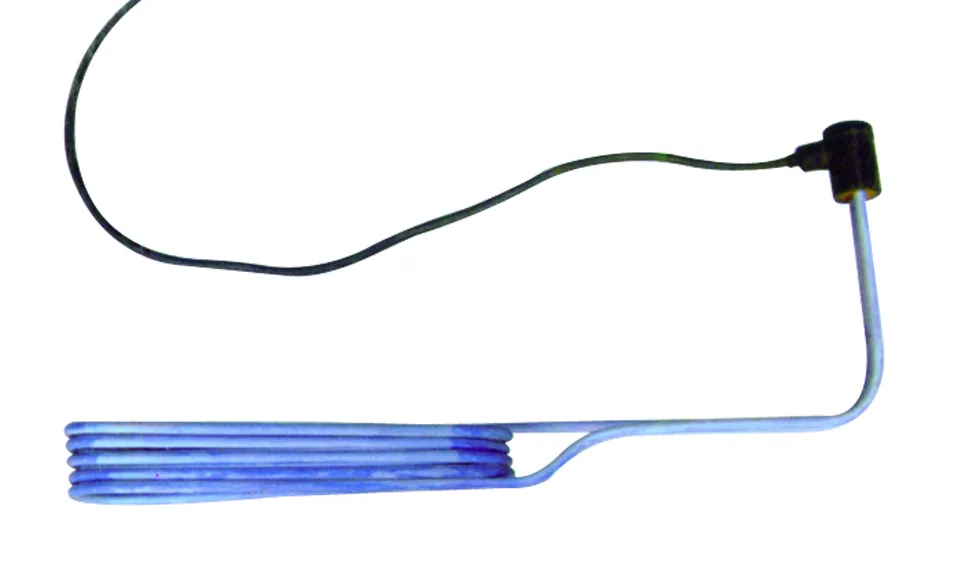 JGS-PTFETo drawing
PTFE-Clad Immersion Heater
Strong acid and alkali plating chemistry to 80 °C
- Max temp
- 176 °F
- Power
- 0.5–6 kW
- Part numbers
- 6
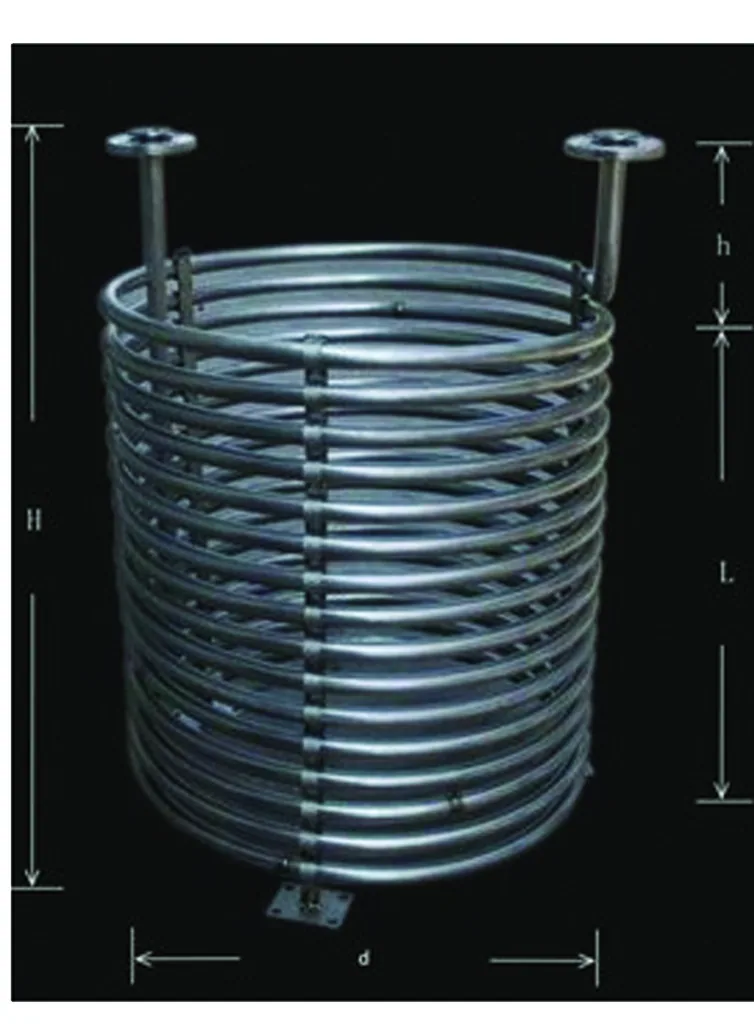 JGCTo drawing
Steam & Process Coil Tube
Helical and flat-spiral coils wound to your vessel
- Max temp
- 572 °F
- Power
- —
- Part numbers
- 8
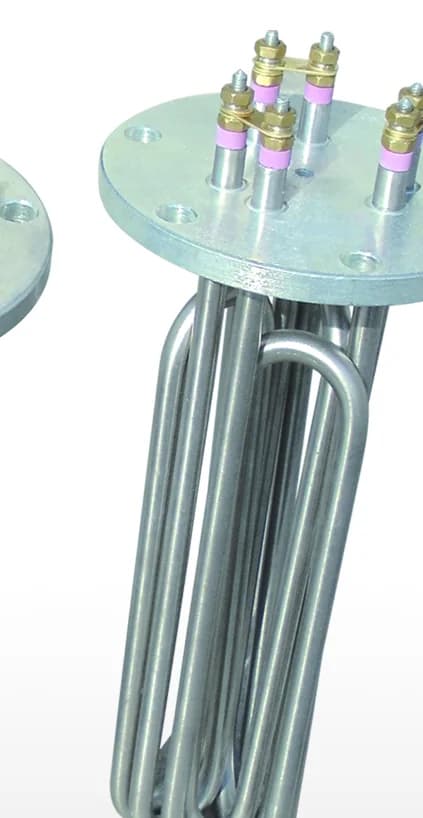 JGSTo drawing
JGS Boiler & Water Immersion Heater
Flange or threaded mount, sealed for 0.8–4 MPa
- Max temp
- 320 °F
- Power
- 1–45 kW
- Part numbers
- 13