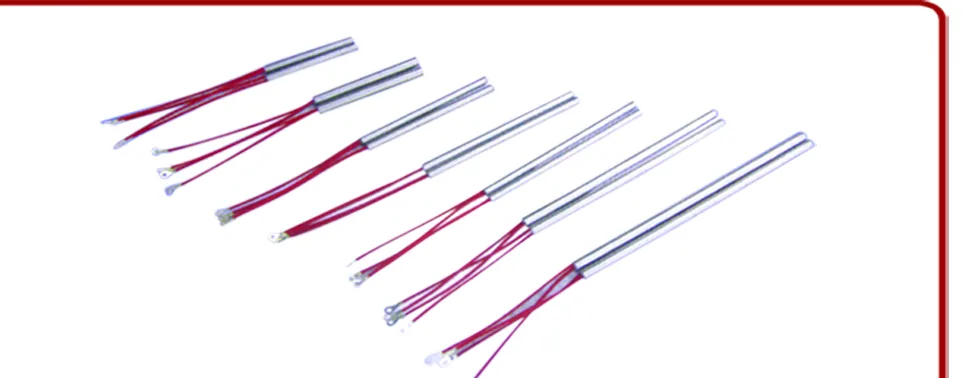
Medium and low watt density single-head cartridge heaters
Medium & Low Density Cartridge Heater
中、低功率密度单头电热管
Single-ended cartridge heater at moderate watt density for general fixture, platen and block heating. Tolerates a drilled rather than reamed bore, at the cost of a longer element for the same load.
- Max medium temperature
- 1022 °F(550 °C)
- Power range
- 0.05 – 2 kW
- Voltage
- 110 / 220 / 380 V, 50 Hz
- Sheath material
- 304 stainless, 316 stainless
- Medium
- Metal / mold
- Mounting
- Bore insert, Bracket
- Tube diameter
- 0.315–0.787 in
- Watt density guidance
- 8–20 W/cm² (52–129 W/in²)
- Lead time
- 12–22 days
- MOQ
- 20 units
- Pricing
- On application
Design notes
Forgiving of bore fit, longer life in general fixtures
Not every heated block justifies a reamed bore. Medium and low density cartridges spread the same wattage over a longer heated zone, so the sheath runs cooler and the heater survives the drilled, slightly oversized bores that real workshop fixtures actually have.
The trade is physical size and warm-up time. A low density cartridge needs more length for the same kilowatts and brings the block up more slowly. Where cycle time matters and the bore can be held to H7, the high density series is the better answer; where the fixture is one-off, the bore is nominal, and the heater must simply keep working, this is the one to specify.
Common builds include stainless-overbraid leads for abrasion resistance, PTFE lead insulation where oil and coolant are present, and corrosion-resistant sheaths for damp environments.
Features
- Moderate watt density — tolerant of drilled bores
- Longer service life in general-purpose fixtures
- Ø8 mm to Ø20 mm diameters
- Stainless overbraid or PTFE lead protection
- Corrosion-resistant sheath option for damp environments
Typical applications
- General fixture and jig heating
- Platen and tooling plate heating
- Gas and liquid line preheat blocks
- Freeze protection on valves and instrument blocks
- Laboratory and test-rig heating blocks
North American build options
- Voltage
- 120 / 208 / 240 / 277 / 480 / 600 V @ 60 Hz
- Threads
- NPT or BSP cut to order
- Flanges
- ANSI B16.5 150# / 300#
- Drawings
- Issued in inches on request
These are build options, not stock items — the catalog part numbers above are 50 Hz with metric fine threads. State what you need on the RFQ.
Part numbers & dimensions
8 catalog part numbers in the JGD-M series
Built to order on diameter, length, wattage, voltage and lead type. Send the bore diameter and depth with the required wattage and we will confirm the density before quoting.
Minimum order quantity for this series is 20 units. Dimensions switch between millimetres and inches with the unit toggle in the header.
Full specification
- Sheath material
- 304 or 316 stainless
- Diameter range
- Ø8 – Ø20 mm
- Max. sheath temperature
- 550 °C
- Watt density
- 8–20 W/cm² (52–129 W/in²)
- Required bore
- Drilled nominal; reamed preferred
- Voltage
- 110 / 220 / 380 V
- Lead protection
- Fiberglass, PTFE or stainless overbraid
Questions engineers ask
When is a low density cartridge the right choice?
When the bore is drilled rather than reamed, when the fixture is a one-off, or when the block simply has to stay hot without a tight cycle time. Spreading the wattage over a longer heated zone keeps the sheath cool enough to survive an imperfect fit — which is the realistic condition in most workshop tooling.
How much slower is warm-up compared to a high density cartridge?
Meaningfully slower, because you are putting fewer watts into each square centimetre of block. If cycle time drives the process, hold the bore to H7 and use the high density series. If the block is held at temperature all shift, the slower warm-up costs nothing and the longer element life is worth having.
Commonly specified with
Related series
 JGD-HTo drawing
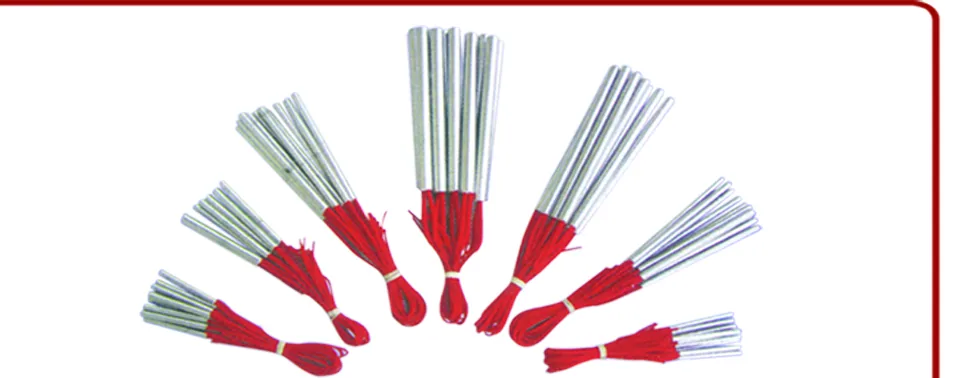
High Watt Density Cartridge Heater
Swaged construction for hot runners, dies and platens
- Max temp
- 1382 °F
- Power
- 0.05–3 kW
- Part numbers
- 9
 JGD-TTo drawing
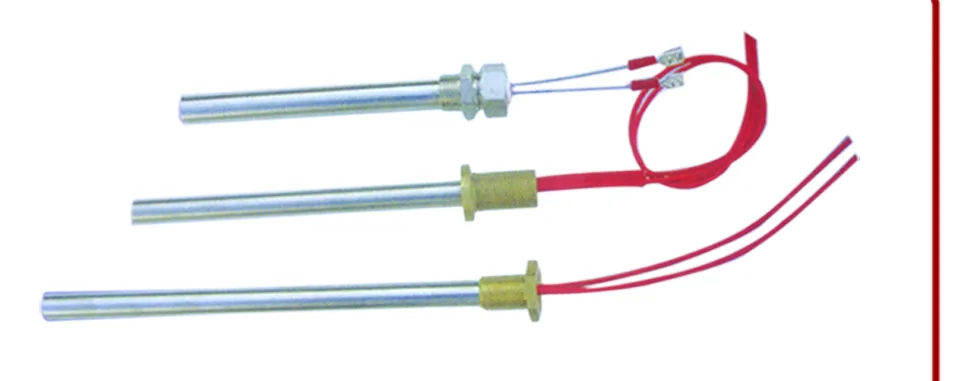
Threaded & Right-Angle Cartridge Heater
Screws into a tapped boss; exits sideways where clearance is short
- Max temp
- 1202 °F
- Power
- 0.05–2 kW
- Part numbers
- 8